



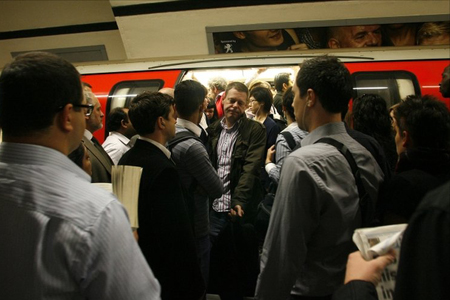
Overcrowded: No wonder Londoners are leaving (image: Susan Turner)
Between 2001 and 2011, nearly 700,000 London residents left the capital for other parts of the UK. Identifying quite who is taking part in this exodus (it's ongoing) and why they're leaving is difficult, partly because of the lack of detailed data but also, one suspects, because people don't really want to know. The fact of people leaving in such numbers doesn't quite fit with the narrative of this city as a booming, vibrant fireball of dynamism, the place where everybody wants to be, indeed the city which nobody in their right mind would abandon.
London's image is firmly in the iron grip of the boosters, who will not tolerate dissent nor indeed any nasty little glitches in the Matrix. So problems — and the leaving of hundreds of thousands to cheaper if not sunnier climes is quite a problem — have to be spun as the "problems of success".
Most of us now know of people who have left or are in the tortured process of deciding to make the move. Some see it as throwing in the towel; as reluctantly giving up after having tried to make it work. Not that London is getting less crowded as a result of this. Far from it. Unprecedented levels of immigration will ensure that the population of the capital will continue to increase. Migration Watch, the body which over the past decade has almost single-handedly managed to broaden the discussion on immigration in the face of hostile liberal media, points out in a new report that over the next 15 years the half a million new houses planned in the capital will be inadequate as immigration soars by over a million.
Migration Watch always faces charges of scaremongering from its detractors, yet every time it produces an estimate or forecast it is shown to have been, if anything, conservative in its calculations. In the case of London, the statistics are indeed startling. According to the report, between 1991 and 2011 the UK-born population in London was static at 5.2 million while the number of foreign-born residents doubled to three million (not including those here illegally). As a result, the length of the social housing waiting list doubled, as did the number of households renting in the private sector. The ratio of London house prices to earnings has more than doubled in that period.
The average house price in the capital has entered Alice in Wonderland territory. Another recent report, from the National Housing Federation, showed that Londoners now have to earn more than £100,000 before they can afford to take out a mortgage big enough to buy a home (the average salary in the capital is £33,000). The average value of a London house is £514,000, which is nearly 20 per cent higher than just a year ago. The polite word with which to describe this situation is "unsustainable". Suffice it to say that the chances of most young people buying a property in the city in which they grew up and now live are virtually nil.
Like this article? Share, save or print using the icons below:


12:11 PM
12:11 PM
2:11 PM