



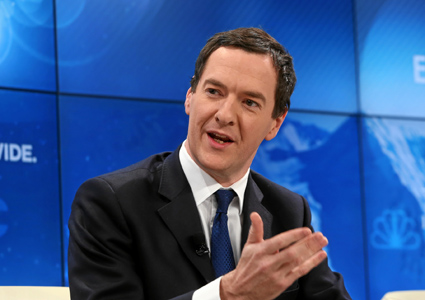
George Osborne: How have the nation's finances fared under him?
With the general election now only weeks away, George Osborne must be glad to have been Chancellor of the Exchequer for a full parliamentary term. But he is unlikely to remain Chancellor in the next government and it is time to assess his performance. How have the nation’s finances fared in his five years as their custodian?
First, no previous full-term Chancellor has incurred debt on such a scale. On average the government has borrowed £100 billion a year since 2010. Although his immediate predecessor, Alistair Darling, ran up debt even more quickly in the crisis years of 2008 and 2009, Darling at 11 Downing Street was overshadowed by Gordon Brown at 10 Downing Street. In effect, Gordon Brown’s stewardship of the public finances lasted from May 1997 to May 2010. In that 13-year period the public debt typically rose by under £50 billion a year, slightly less than half the rate under Osborne.
Second, interest rates in the last five years have been the lowest in history. When Osborne was appointed Chancellor in May 2010, the Bank of England’s rate was 0.5 per cent; if and when he leaves the Treasury in May 2010, the Bank rate will still be 0.5 per cent. As the Bank rate had never been under 2 per cent before May 2010, Osborne has in this respect been the most fortunate British finance minister ever.
Interest on central government debt was £44.8 billion in 2010, when the present government came to power. Last year it was higher, at £49 billion, but the increase of under 10 per cent compares with a leap in public debt of almost 50 per cent. Moreover, despite all the disappointments on the productivity front, national income and output have grown in money terms since the Conservative-LibDem coalition was formed. So the ratios of interest payments to the national income and the overall tax take have declined.
Osborne appears to have achieved the miraculous. He has combined budgetary overspending with a reduction in cost of the debt burden. Future taxpayers will certainly be grateful for his government’s success in selling large amounts of long-term debt at remarkably low interest rates. In the 2014/15 financial year about £30 billion of long-dated gilts with an interest coupon of beneath 3 per cent are likely to have been bought by investors. The proceeds from these transactions will be used in part to redeem the 3.5 per cent War Loan stock and the small 4 per cent Consolidated Loan stock.
Like this article? Share, save or print using the icons below:


- Opposites meet in the land of Scrugletopia
- The Battle Against The Philistines Never Ceases
- Home from home for the Bolshevik elite
- Can Macron Save France — Or Is He Its Undertaker?
- Why France Is Revolting Against The Ancien Regime
- How The EU Elite Paved The Way For Populism
- A Decent Woman Betrayed By Her Gruesome Twosome
- Last Of The Great Elitists
9:03 AM
9:03 AM