



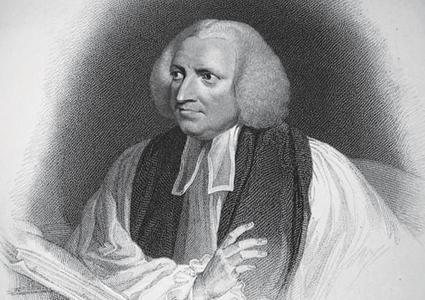
 Robert Lowth, Bishop of London: His 1762 grammar is responsible for many of today’s linguistic shibboleths
Nothing so troubled me this year as a glowing review I published on a book dismissing the supposed “rules” of English grammar. I kept reading over it and wondering if I had made a mistake.
I don’t regret the praise I gave to Oliver Kamm’s Accidence Will Happen: The Non-Pedantic Guide to English Usage (Weidenfeld & Nicolson, £9.99). It is a marvellous book, which everyone interested in language should read. Kamm is quite right to say that the rules grammarians insist on are 18th-century taboos which good writers have always ignored. There is no literate reason to insist on the distinction between “less” and “fewer,” for instance, or the prohibition against splitting infinitives. No linguist on earth believes that language is anything other than usage. If most English speakers use “less” and “fewer” interchangeably, it makes no sense to say that they are wrong.
All true. But an objection made to me by Simon Heffer, one of Kamm’s many targets, nagged away. If you were trying to help poor children get on, you would teach them to observe the “rules”, just as you would encourage them to speak BBC English. Conformity would not only protect them from class prejudice, it would help them to be understood. Inarticulacy is a curse. Success comes when you make others understand you, and not just material success either. Kamm and other linguists could not see it. They were well-spoken men and women promulgating anarchist notions that would keep the poor down.
The objections holds until you realise that the worst users of English are not just poor people who cannot spit out a sentence without an obscenity. The bureaucratic-speak of the civil service, the business-speak of private-sector managers, and the jargon of academics are all the more offensive because their authors do not have the excuse of poverty.
Arguments about grammar should be arguments about style. I do not claim to be anything more than a competent writer. On the rare occasions when I have written a book or article that does not make me shudder on re-reading, I have followed my own style guidelines, which may help you to decide when you should stick by the “rules” of English and when you should ignore them.
1. Say Something. Corporate mailings from managers, academic papers written to meet a department’s research target, Daily Mail stories on celebrities who have done nothing more than show their cleavage are instantly forgotten. The authors did not want to write them. They have nothing worth saying, and it shows.
It may sound unrealistically high-minded to insist that you must believe in the importance of what you are writing. But the advice applies as much to lowbrow as to highbrow work. Many people try and fail to write pulp bestsellers because their cynicism finds them out. However little you may think of their work, popular authors who succeed in the press and fiction mean what they say as much as their serious counterparts do. They have their own integrity, and understand that the first rule of good writing is to ask why you need to write at all.
Like this article? Share, save or print using the icons below:


1:02 PM
3:01 PM
2:01 PM
2:01 PM
3:01 AM
4:01 AM
3:01 AM
9:12 PM
8:12 PM
11:12 PM