



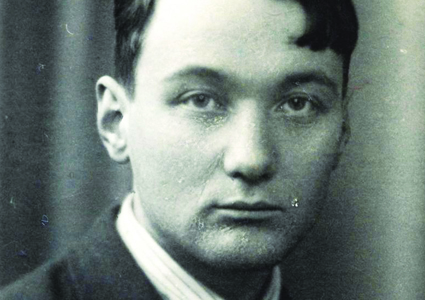
Lev Gumilev: Father of Putin’s conspiracist ideology
Few, even in Russia, can remember what they were doing on the day in 1999 that Vladimir Putin became prime minister and the anointed successor to that sick old man in the Kremlin, Boris Yeltsin. In Britain, this opaque Russian succession was not even a lead news item. Fewer, especially in Moscow, expected this twitchy, mumbling, overpromoted, poorly-rated head of Russian domestic intelligence to last long. None expected him to hold power for himself. It seemed obvious he would only guard it for those who chose him.
Quietly, without them even noticing, the fate of millions was decided that day. In a matter of hours, a hastily-planned reshuffle determined who would be rich and who would be poor, who would found gas dynasties and who would sit in jail for decades to come. Russia’s borders, pipelines and school history textbooks were all to be recast in the shape of Yeltsin’s choice that day. And though not even the lieutenant colonel from St Petersburg himself could fathom it, the enthronement would radiate backwards and forwards, changing not only the future but also Russia’s sense of its past.
To grasp this, you only have to switch on Russian television. Watching is to enter a dangerous, angry wonderland. Putin’s box messages the country relentlessly: Russia is special, Russia is under attack, Russia swarms with traitors, Russia was betrayed in 1991, Russia was glorious under Stalin’s steady hand. This was not what watching Russian TV was like back in 1999. Then there was a cacophony of voices. Documentaries about the Kolyma Gulag were followed by blockbusters glorifying St Petersburg gangsters, talking heads duelled over whether Russia should join Nato or defend Serbia, and politicians yelled at each other over whether the country should bother to fight the rebellion in Chechnya.
Where did these voices go? How did Russia end up in this wonderland? What is the ideology (or aesthetic) behind it?
Black Wind, White Snow: The Rise of Russia’s New Nationalism (Yale, £25) by the Financial Times’s former Moscow bureau chief Charles Clover is required reading. This is a vivid panoramic history of bad ideas, chasing the metastasis of the doctrine known as Eurasianism from chit-chat in gilded Tsarist salons and chipped crockery in Parisian exile, to secretive histories scrawled in the hutches of the Gulag and the backrooms of gloomy Soviet universities, to becoming Putin’s favoured ideology. Black Wind, White Snow works as a succession of intellectual biographies of Russia’s great Eurasianists, from Petr Savitsky in Paris to Alexander Dugin, ubiquitous on Russian newscasts today. They tell the story of Russia’s new nationalism, and how its myths and fairytales went from talking-points at cranks’ tea parties to being officially published by the Russian General Staff, infectiously popular within the Kremlin elite, and namechecked by the president himself as he aims to build his Eurasian Union. Clover tells the story of these men as infected with an idea, a latent 1930s’ ideology, which only now has gone viral in Putin’s country.
Black Wind, White Snow is the inverted narrative of Russia’s late 20th century. Instead of tracing the familiar, comforting stories of those who overcame Soviet tyranny, it traces the lives and minds of the bitter, strange and resentful losers whose imagined Eurasian fantasia was championed by the security establishment which slowly but relentlessly overpowered 1990s’ liberalism.
Like this article? Share, save or print using the icons below:


More Features
- We Need Churchill's Vison of Liberty More Than Ever
- The Play's The Thing, So Leave The Words Alone
- An Aesthetic and Moral Disaster
- How we Syrians destroyed our home — with your help
- Euphoric Labour won’t win power led by a pied piper
- Don’t be ‘difficult’ — try ‘formidable’, Mrs May
- Enough is enough of terror — but also of our self-doubt
- Iraq’s Christians pray for help that never comes
- The Atlantic alliance may be broken beyond repair
- Catholic tastes: both English and European
- Brexit as myth: Exodus, Reckoning, or Sacrifice?
- A Decent Woman Betrayed By Her Gruesome Twosome
- Can Macron Save France — Or Is He Its Undertaker?
- Europe's Revival Is At Hand, Thanks To Brexit
- Is This The Most Important British General Election Since 1979?
- The New Europe Must Be About More Than Money
- Our Best Brexit Policy Is All-Out Free Trade
- The Bursting Of Our 'Kabubble' Fantasies
- Gambling On A Greater More Gracious Britain
- Xi Versus Trump: The Emperor And The Tycoon
Popular Standpoint topics

- Cultural Climate Change
- Opposites meet in the land of Scrugletopia
- The Battle Against The Philistines Never Ceases
- Home from home for the Bolshevik elite
- Can Macron Save France — Or Is He Its Undertaker?
- How The EU Elite Paved The Way For Populism
- Why France Is Revolting Against The Ancien Regime
- A Decent Woman Betrayed By Her Gruesome Twosome
12:05 PM
8:04 PM
10:04 PM