



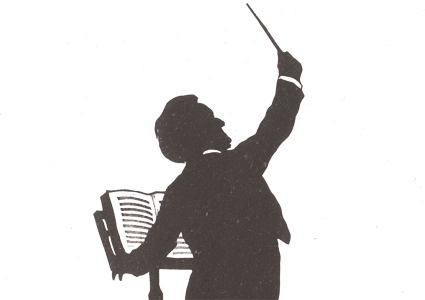
Richard Wagner: He saw art as expressing and completing our religious emotions
There used to be a Guinness advertisement in which the gag was along the lines: “I’ve never tried Guinness, because I don’t like the taste.” Something similar happens from time to time when you talk to otherwise curious people about the music dramas of Wagner, and The Ring of the Nibelung in particular. Ask one of these types which parts of Wagner’s work they particularly dislike, and you will be met with a glowering and scandalised “All of it!”, a response designed to forestall potentially embarrassing further inquiry.
Roger Scruton, however, starts from the barely disputable premise that The Ring is one of the most important works of art produced in the last 200 years. Those whose minds are definitively closed to what it has to say, how it says it, and to the vastness of Wagner’s significance in the modernist movement (a topic explored, for example, in Bryan Magee’s claim that the Wagnerian orchestra is the origin of the stream-of-consciousness literature of Woolf and Joyce) — these are beyond even Scruton’s reach. But for those determined at last to become acquainted with this masterpiece, as well as for those who already know it, The Ring of Truth is both a notable contribution and a piece of writing whose eloquence is worthy of its great theme.
There is of course already a vast literature on the subject. And Scruton is conscious of the inevitable question: “Why another book on The Ring?” He answers it decisively, by writing a book on this inexhaustible work unlike any other. The greatest musical scholar who has ever written about The Ring was Deryck Cooke. But he did not seek to penetrate as deeply into the philosophical ramifications of the work as into the musical and textual aspects, and in any event his book was never anywhere near completed. (And he would have been glad to have some of Scruton’s original musical insights to his own name.) Those of a more philosophic cast of mind often tend to be hampered by single-issue viewpoints: George Bernard Shaw notoriously saw The Ring as an allegory for Fabian socio-economic truths; Robert Donington imposed a tediously Procrustean post-Jungian psychology onto the work; Paul Heise (at huge length, and only online) constructs a complex and eventually over-literal allegorical reading (e.g. Siegfried equals poetry; Brünnhilde equals music) which depends heavily on the admittedly profound influence on the younger Wagner of the philosophy of Feuerbach. The best modern philosophical treatment of Wagner is Magee’s Wagner and Philosophy, but this exceptionally readable book makes no claim to profound musical analysis.
Like this article? Share, save or print using the icons below:


11:08 PM
1:08 PM
7:08 PM