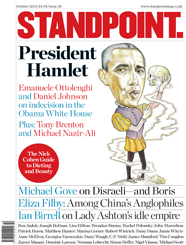



How about Elizabeth Jennings, I suggested to my agent and a couple of publishers when the conversation turned to a new project. My agent, to his credit, looked embarrassed and said something about the predilections of the current non-fiction market. The publishers were more brutal in their verdict: just not famous enough. This despite Jennings winning popular awards such as the WH Smith Prize in 1987 for her poetry and her leaving us with several famous/well known/celebrated poems. My own favourite is her sad portrait, in One Flesh, of the elderly couple “Lying apart now, each in a separate bed” whom finally she identifies as her own parents – “Whose fire from which I came, has now grown cold.”
It is not, then, achievements that are conspicuously lacking in her case. Or, indeed, a dramatic life. Her life story possesses the same sort of narrative ups and downs that made Shine – Geoffrey Rush’s biopic about the troubled Australian pianist David Helfgott – such a compelling film. No, it is fame in the modern sense that now pollutes every corner of our culture. Without instant and empty name-recognition, you’re just not worth bothering with.


- The Zombie Argument that Refuses to Die
- Online Only: The Price Paid for Criticising Islam
- Overrated: Dan Brown
- Overrated: George Monbiot
- Is the Brain the Key to Understanding Religion?
- 'Please Sir, I Just Want to Learn More'
- An Assault on Free Speech at the LSE
- The Alternative History of an Undivided India
- The Zombie Argument that Refuses to Die
- Online Only: The Price Paid for Criticising Islam
- Overrated: Dan Brown
- Overrated: George Monbiot
- Is the Brain the Key to Understanding Religion?
- 'Please Sir, I Just Want to Learn More'
- An Assault on Free Speech at the LSE
- The Alternative History of an Undivided India
- Decline and Fall of the History Men
- Uncritical Theorists Who Misread the Nazis
- The Zombie Argument that Refuses to Die
- The Banality of Hannah Arendt
- From Kitsch to Cool: Picasso and Modern Art
- Is the Brain the Key to Understanding Religion?
- Time to Wise Up to the Muslim Brotherhood
- Midfield Virtuoso Finds His Perfect Pitch
- Online Only: The Price Paid for Criticising Islam
- Overrated: George Monbiot
- Letter from Ukraine: Reviving Lost Literature
- On Pilgrimage with the Hasids
- The Blob Has Run Schools For Decades. Not Any More
- Bismarck Versus Blair — A Foreign Policy Crossroads
- Tsar Of The Holy Land
- My Dieting Guide: Listen To Mother
10:08 AM