



You cannot know the chance of very unlikely events by observing how often they occur. They do not occur often enough for that. But you can still sometimes know their probability. For example, we know that the probability of 100 consecutive coin tosses landing heads is 1/2100, not because we have seen this happen, but because we know that the probability of each toss landing heads is 1/2.
For many other improbable events, however, the matter is not so simple. Not only are they too rare to observe their long-run frequency, but we do not understand their underlying causes well enough. For example, because the causes of weather and of economic events are so varied and complicated in their interactions, meteorology and economics remain inexact sciences, unable to tell us the chances of unlikely, extreme events.
And because we humans are inclined to certain errors of reasoning, such as seeing patterns where there are none and underestimating the chance of things we have not previously seen, we get shafted by unlikely events more often than is strictly necessary.
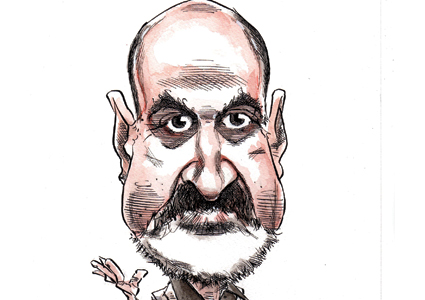
This is a short version of The Black Swan, the 2007 best-seller by Nassim Nicholas Taleb, a (now) 50-year-old Lebanese former investment banker. His Fooled by Randomness, published in 2001, explored similar themes. But it did not enjoy the same success because its timing was not as good: Black Swan was published during a financial crisis that Taleb had predicted.
He was quickly propelled to stardom. Bryan Appleyard described him in the Sunday Times as "the hottest thinker in the world". He has since added a post at Oxford University's Said Business School to his position at the Polytechnic Institute of New York University, and he is in great demand on the speaking circuit.
It is ironic that Taleb should be credited with genius on account of the coincidence of Black Swan's publication with a financial crisis he had predicted. It displays exactly the kind of erroneous thinking that he complains of. If the financial crisis were an unlikely "black swan" event of the kind that Taleb discusses, then he could not have known its probability.
Taleb's central hypothesis in Black Swan is right. But it is simple and worth only a chapter rather than an entire book. Taleb inflates its significance with an absurdly combative and grandiose writing style. It is Taleb versus the corrupt fools of the financial establishment; Taleb versus the false mathematical rigour of the academy; Taleb returning us to the wisdom of the ages.


- Cyril Ramaphosa's poisoned chalice
- Is South Africa about to fall apart?
- The onslaught against the West's moral codes
- Technology menaces childhood and culture
- Presidents for life Putin and Xi menace the West
- Is the mental illness epidemic just a myth?
- The inevitability of Fortress Europe
- How Monet created motion pictures
5:12 AM
10:12 PM
11:12 PM
2:12 PM
8:12 AM
3:12 AM
1:12 AM
12:12 AM
11:12 PM
9:12 PM