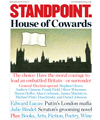



Islam has a long, rich and profound tradition of ethics, drawn not only from scripture and tradition but from ancient Judaic, Greek, Persian and Indian sources. You would never guess this from Ramadan's presentation. To judge from his arguments, Islamic ethics consists of little more than pious nudges, self-righteous disclaimers, and nagging pieties to be smuggled into scientific protocols and universal declarations. Even so, there is something appalling, something quite shameless, in Ramadan's endeavour, however quixotic it may seem. (This shamelessness was visible to all when he appeared on French television, in 2003, to debate Nicolas Sarkozy, at that time Minister of the Interior, and declared that there should be a "moratorium" on the stoning of adulterers - a typical Ramadanian wriggle.) Islamic ethics will become credible only when its advocates have the courage to act on it, and that means not only taking a hard look at cruel immemorial practices such as stoning but denouncing and repudiating the violent and distinctly unethical elements in their midst. If the Dar al-Islam, the "house of Islam", is in desperate need of reform, as Ramadan himself contends, the first step might be to evict the murderous ideologues who infest its premises. That would be a reform radical enough for us all.


Post your comment

- The Loss Of Faith Made Music Mute
- The Great Betrayal: How Liberals Appease Islam
- Political Correctness Is Devouring Itself
- The New Language Of Political Narcissism
- Why The World Still Loves Shakespeare
- Don’t Listen to Britain’s Designer Demagogues
- Who's in Charge of BBC News?
- An English parliament: the only way to save the UK
- The Loss Of Faith Made Music Mute
- The Great Betrayal: How Liberals Appease Islam
- Political Correctness Is Devouring Itself
- The New Language Of Political Narcissism
- Why The World Still Loves Shakespeare
- Don’t Listen to Britain’s Designer Demagogues
- Who's in Charge of BBC News?
- An English parliament: the only way to save the UK
- The Loss Of Faith Made Music Mute
- The Great Betrayal: How Liberals Appease Islam
- Why The World Still Loves Shakespeare
- Who Will Lead The Berlin Band?
- Putin and the Art of Political Fantasy
- Political Correctness Is Devouring Itself
- The New Language Of Political Narcissism
- Inside The World Of 'Non-Violent' Islamism