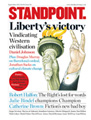



What happened in the 13th century was that the Western world received back the writings of Aristotle from the Islamic world where they had been translated, studied and commented upon. That much is common knowledge — you hear it in politically correct classes. What is not as often heard is how the Islamic world got it. The answer is that the Islamic world got not just Aristotle but Greek knowledge in general, of science, philosophy and so on from the work of mainly Christian clergy who translated either directly from the Greek into Arabic or from Syriac. This knowledge was transmitted to the West either through Jewish traders or through the Arabic-speaking Christian communities in the West, i.e. the Iberian peninsula. In the past the emphasis had been on a divinely-ordered society, governed by a mixture of divine, natural and positive law. The emphasis now was on the providential nature of the world itself, that it was governed by natural law, on the particular, and therefore on the human person having his or her own identity and place within this world that was ordered in this kind of way. To this the Christian, out of the teaching of the Bible, added that human beings had been made in God's image and this was something quite new — we don't find it in Aristotle. Aristotle believed in what you might call natural subjection, that there are some people who are born to be free and others who are born to be slaves. He said notoriously or famously, depending on your point of view, that people living in the northern part of the world could be enslaved because they had courage without intelligence, and people in the southern part could be enslaved because they had intelligence without courage. The Greeks, of course, had both. So the idea of inalienable human dignity is not to be found in Aristotle and is of Judaeo-Christian provenance.
But this new importance of the person resulted in a greater recognition of freedom and of conscience. From it emerged the idea that such persons had to consent to how they were governed and so a new kind of democracy, different from the harshly selective model of the Greeks, could gradually develop. From it also arose the idea of natural rights which belonged to us inalienably and could not be taken away. This assumed especial importance in the New World as some Christians tried to defend the fundamental freedoms of the indigenous people. The Enlightenment received these ideas and embellished them and they serve as the background to contemporary documents such as the Universal Declaration of Human Rights. It is interesting to note that in equivalent Islamic declarations, Article 18 (which guarantees freedom of thought, conscience and belief) is entirely absent.
Most countries are signatories to the UN Declaration, so why are we facing the situation that we are and what actually are the threats to this hard-won tradition of freedom and tolerance that we have?


Post your comment
- Self-Deception
- New Poetry
- Cultural Climate Change
- The Fate Of The West
- Monks, Magi and Mosques: Religion on the Silk Road
- The Rest Is Silence
- The Sacred And The Secular In Contemporary Art
- Siege
- Regulating Markets In An Economy Without Angels
- Birth Mother
- Europe and the Nation State: Thoughts on Ortega y Gasset
- Seven New Poems
- Rediscovering Our Moral Purpose
- Our Strength And Stay
- Three Poems By Heinrich Heine
- Two Poems From Spain
- Why Only Countries Willing To Take Risks Will Survive And Prosper
- From The Berlin Wall To Brexit: Why Politics Needs A Free Press
- Saying Yes To Sara
- The Viagra Triangle

- Cultural Climate Change
- Opposites meet in the land of Scrugletopia
- The Battle Against The Philistines Never Ceases
- Home from home for the Bolshevik elite
- Can Macron Save France — Or Is He Its Undertaker?
- How The EU Elite Paved The Way For Populism
- Why France Is Revolting Against The Ancien Regime
- A Decent Woman Betrayed By Her Gruesome Twosome