


In June 1940, Cordier was 19. Disgusted by Pétain's 17 June broadcast calling for an armistice, he resolved to leave France and continue fighting from abroad. He managed to board a Belgian ship supposedly destined for French North Africa but it ended up heading for Britain instead. On 25 June, he landed at Falmouth-not a reassuring destination for a boy from an Anglophobic background who had heard (false) rumours about British sailors at Dunkirk chopping off the hands of French soldiers desperate to board their ships. Taken to a transit camp outside London, Cordier first heard of General de Gaulle and immediately volunteered to join him. He describes vividly the experiences of the exiguous band of early Free French recruits — their burning desire to fight, their intense sense of comradeship, their bouts of homesickness, their growing admiration for the phlegmatic British and their almost mystical reverence for de Gaulle. Cordier's first encounter with de Gaulle, as for so many others, was disconcerting. On de Gaulle's first visit to review his "troops", he reminded Cordier of a huge heron, distant, cold and impenetrable, but quickly Cordier was won over by the strange cadences of the general's rhetoric and the uncompromising lucidity of his vision.
Cordier joined the Free French Intelligence Services, where he was taught how to parachute, to code and decode messages and to use explosives. These two years in England were also a period of self-education. Cordier's passion to boot the Germans out of France was inspired by no allegiance to the traditions of French democracy. From an ultra-conservative bourgeois background, he was a passionate supporter of the anti-Republican ideologue, Charles Maurras. Cordier's political ideas were simple: France's defeat was due to the traitorous activities of socialists, freemasons and Jews. Now for the first time he met young volunteers like himself who were democrats, even socialists — but no less patriotic or brave. This is a salutary reminder that the first fighters came from every conceivable background: the adventure of resistance was a gradual voyage of discovery in which the French came to learn about each other and to re-evaluate their previous conceptions of the world. Those such as Cordier, who hated the Boche, encountered others for whom the enemy was the Nazi.
In London, Cordier was won over by the extraordinary intelligence of another French volunteer, older than himself. This was Raymond Aron, who after the war was to become one of the most celebrated French intellectuals of his generation. One day, Cordier was amazed to be told that Aron was Jewish. For Cordier, Jews had always been abstract hate figures, but he had never knowingly met one. Aron fitted none of his preconceptions. On the eve of Cordier's departure for France, Aron asked Cordier to warn any fighters that he might meet there to beware of the dictatorial tendencies of de Gaulle: "If not, France will head for catastrophe." Cordier would not hear a word against the general, but he began to understand that the world was more complicated than just killing the Boche.
Parachuted into France on 24 July 1942, Cordier was sent to work for Georges Bidault, the organiser of the underground press. He was also asked to hand over an envelope to a certain "Rex" in Lyons. After he had accomplished this task, "Rex" — Moulin's pseudonym — invited him to dinner. By the end of the evening, he had suborned Cordier from his original mission and told him that he would be now working for him: he should present himself the next morning to receive his instructions. From that day, for almost a year, Cordier would see Moulin every day, often several times a day — except on his absences from Lyons. He arranged his meetings, distributed messages and money to Resistance leaders, decoded telegrams from London, coded and sent Moulin's own despatches to London — as well as carrying out ordinary chores. The French national archives contain a crucial report in Moulin's own hand-and on the bottom in Cordier's hand is written "benzine, sausages, bread, cigarettes" to remind him of some shopping Moulin had asked him to do.
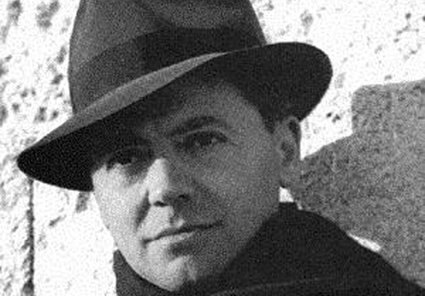
Authority, integrity and charm: Resistance leader Jean Moulin
To carry out his duties, Cordier had to organise a system of letterboxes where messages could be left (Lyons had the advantage that, unlike Paris, its buildings had no concierges), recruit his own helpers, find lodgings — in a city he hardly knew. He conveys the extraordinary intensity of his existence in this period: the constant danger of being arrested in a routine inspection of papers, the frequent news of the arrests of comrades, the moments of immeasurable solitude-and the sheer exhaustion. Finding so much time taken up walking from one rendezvous to another, Cordier asked Moulin's permission to buy a bicycle out of the funds allocated from London. But when the bicycle was stolen, Moulin, who believed in not wasting official funds, told him curtly: "So now you will just have to walk." Cordier also describes the strange paradoxes of Occupied France. One family who sheltered him in their apartment for several weeks out of sympathy for the Resistance turned out also to be fervent supporters of Marshal Pétain. In Paris, he observes that the only people to be seen carrying the German collaborationist magazine Signal were Resistance fighters who were using it to identify each other at meetings in public places. If the Germans had arrested everyone carrying Signal, they would have destroyed the Resistance.


- Admit It, Mr Kerry: You Blundered
- Bismarck Versus Blair — A Foreign Policy Crossroads
- Arab Spring, Islamist Summer — What Next?
- The Diplomat the Whole World Ignores
- The Blob Has Run Schools For Decades. Not Any More
- Would You Intervene — Or Pass On The Other Side?
- He Died That Others Might Live In Peace
- The Hero's Journey is Hollywood's McMyth
- Online Only: Countering the Counter-Jihadists
- Online Only: The Price Paid for Criticising Islam
- 'Please Sir, I Just Want to Learn More'
- Why Students Should Be Glad To Pay Tuition Fees
- A 'Liberal Racist'? Me? I Felt Like a Heretic
- Demolish the Relics of Yesterday's Future
- Was Britain Right To Go To War In 1914?
- German Victorians Who Helped Transform Britain
- The Alternative History of an Undivided India
- Online Only: Heirs to the Left
- ONLINE ONLY: The Hayward Gallery's Fashionable Primitives
- ONLINE ONLY: A Spiritual Corner of Southwark

- The Zombie Argument that Refuses to Die
- Online Only: The Price Paid for Criticising Islam
- Overrated: Dan Brown
- Overrated: George Monbiot
- Is the Brain the Key to Understanding Religion?
- 'Please Sir, I Just Want to Learn More'
- An Assault on Free Speech at the LSE
- The Alternative History of an Undivided India
- The Zombie Argument that Refuses to Die
- Online Only: The Price Paid for Criticising Islam
- Overrated: Dan Brown
- Overrated: George Monbiot
- Is the Brain the Key to Understanding Religion?
- 'Please Sir, I Just Want to Learn More'
- An Assault on Free Speech at the LSE
- The Alternative History of an Undivided India
- Decline and Fall of the History Men
- Uncritical Theorists Who Misread the Nazis
- The Zombie Argument that Refuses to Die
- The Banality of Hannah Arendt
- From Kitsch to Cool: Picasso and Modern Art
- Is the Brain the Key to Understanding Religion?
- Time to Wise Up to the Muslim Brotherhood
- Midfield Virtuoso Finds His Perfect Pitch
- Online Only: The Price Paid for Criticising Islam
- Overrated: George Monbiot
- Letter from Ukraine: Reviving Lost Literature
- On Pilgrimage with the Hasids
- The Blob Has Run Schools For Decades. Not Any More
- Tsar Of The Holy Land
- Bismarck Versus Blair — A Foreign Policy Crossroads
- My Dieting Guide: Listen To Mother
7:12 PM
7:12 PM
5:12 PM