


Britain's relationship with dead soldiers has been revolutionised over the past 90 years. In a stinging criticism of British commanders in the First World War witnessed and recorded by General Erich von Falkenhayn, the German Colonel Max Hoffmann described British troops as "lions led by donkeys". In one regard, at least, the remark was plaintively inaccurate: the casualty rate of British generals during that conflict, killed leading their men, was the highest of any army on the Western Front. When it came to physical courage and leadership by example, British commanders were no donkeys.
But in terms of their obstinate refusal to adapt to changing warfare, the comment had more resonance. It took more than three years and hundreds of thousands of dead for British First World War commanders to evolve their tactics. The toll was faced with apparent callous disregard by the generals planning the operations.
"The nation must be taught to bear losses," wrote General Douglas Haig in 1916, shortly before committing his men to the battle of the Somme, where there were 60,000 casualties on the first day.
Public support for that war did endure, but only on credit. By the start of the Second World War, British commanders and politicians both knew that their people would never accept a similar expenditure in soldiers' lives and a more cautious and sophisticated command hierarchy evolved accordingly. To some extent, the Somme still echoes today in the subconsciousness of a British society that is anyway now more sensitive to death. As a result, the pressure to avoid casualties in Helmand, despite the occasional intensity of the fighting, has never been so great on British commanders as now.
"The perennial stresses of command haven't changed," admitted Lieutenant-Colonel Nick Borton, 38, sent to command the 5 Scots battle group in Musa Qala last June after his predecessor was wounded in action. "Using your professional experience and judgement to make battlefield decisions that keep your men alive: that's the real stress, the rest are frustrations.


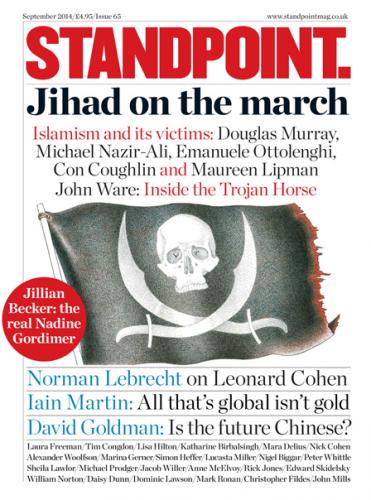
- The Plot to Islamise Birmingham’s Schools
- Nigeria, Iraq, Gaza—The Threat is the Same
- Radical Islam and its Invisible Victims
- The Man Who Tried to Teach us all a Lesson
- Globalisation and The Crisis of the Nation State
- The Medium Isn’t Always the Message
- What sort of Europe does Cameron Want?
- Is China outstripping the West at innovation?
- Piketty’s panacea will make inequality worse
- The Moral Strength of Leonard Cohen
- Designer who taught us to keep it simple
- The US Can Still Help Save Syria — and Iraq
- Russian Resurgence has Blindsided Nato
- On Europe, Nothing Less than Treaty Change will do
- Putin has his Useful Idiots on the Left and the Right
- Sarajevo: Where the Century of Terror Began
- Allen Lane’s Pelicans Take Wing Once More
- How Not to Remember the First World War
- Opera is Not Just Our Most Expensive Noise
- Jonathan Miller: One Man, Two Cultures

10:12 AM
6:12 PM