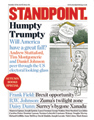



For a start, Stuermer's main source material, his enviable access to the Russian leadership, is not accompanied by a willingness to listen critically to what they tell him. He offers the reader some banal observations about the circumstances of the meetings, but scarcely a note of real analysis about what is said, or who is saying it. He takes at face value, for example, the question of Putin's academic credentials. Yet research by Clifford Gaddy, an American scholar, has identified a huge chunk of what purports to be original research in Putin's PhD thesis that had been copied from another book. Although he is willing to accept that corruption has rocketed under Putin, and that it gets worse the higher up you go, he seems unaware of any of the speculation surrounding the Russian leader's personal wealth. Indeed, he suggests - seemingly with a straight face - the comical notion that Putin might want to retire from politics and take up a provincial job in Gazprom in St Petersburg "to make real money". He also ignores Putin's notorious propensity to use gangster slang and his racism - for example, in banning non-Russians from trading in the country's markets. He seems to think that because Putin speaks Western languages and knows how to deal with foreign journalists, he is ipso facto no different from any other European politician. This is a severe misapprehension which weakens the rest of the book.
Stuermer's attempts to explain Russia are crippled by his shaky grasp of the country's recent history and a remarkable inability to get the details right. To take just one elementary example, he seems unaware that magazin in Russian means "shop" and writes of boutiques in the "old GUM Magazine buildings" near the Kremlin - a double mistake, because the "M" in "GUM" already stands for magazin. That is a bit like calling the Gestapo (Geheime-
StaatsPolizei or Secret State Police) the "Gestapo police". He misspells the name of the Tsarist-era secret police and mistranslates the FSB as the Federal Intelligence Service. He calls the pro-Putin youth movement Nasi, not Nashi (a word that means "Ours" in Russian). He thinks that Siloviki means the people in power; the word indeed derives from the Russian word sila, or power, but it means veterans of the Soviet security, intelligence and military organs . Though these people are again in power their label comes from their previous jobs. That is quite a revealing error.


- Race To The White House Through The Looking-Glass
- Brexit Gives Us A Historic Opportunity
- American Conservatives Must Stand Up To Trump
- Cicero's Analysis Of Decline Offers Lessons For The West
- Deepdene: Rise and Fall of the House of Hope
- Debunking the EU Referendum Myths
- Britain's Opportunity Is Europe's Warning
- Controlling Immigration Is Good For Democracy
- The Pied Piper of Islington
- The West Cannot Afford To Ditch Nato
- End Of History — Or Clash Of Civilisations?
- We Can Defeat Islamist Terror — But Not On Our Own
- Without the Emperor, What is Left of Old Japan?
- Now Or Never
- Who Will Heal This Divided Country?
- What Made The West Great Is What Will Save Us
- Shock And Awe: Tales Of A Washington Insider
- We Shouldn't Let Old Men Rot Away In Jail
- Arnold Wesker’s Bid To Build A New Jerusalem
- Our EU Deal Gives Us The Best Of Both Worlds

11:01 AM
10:01 AM
2:01 PM
3:01 PM
4:01 AM
4:01 AM
2:12 PM
11:12 PM
5:12 PM
4:12 AM