


But it still exists today, little changed in form since it was drawn up over a century ago, source of a growing sense of injustice and abandonment in the tribal agencies. Moreover, Pakistan's Political Parties Act has never been extended to Fata's 3.6 million residents, leaving them unable to form their own political parties. Though technically able to vote in national elections they remain effectively sidelined from Pakistan's greater political structure, second-class citizens in a nation that is nominally their own, still reliant on a decrepit system of maliks and political agents. The knock-on effect to development has been predictable. It is the most economically disadvantaged area of Pakistan; 60 per cent of Fata's population live below the national poverty line. Four out of five are unemployed; fewer than 18 per cent are literate; schools, roads, doctors and health clinics are rarities. "The people of Fata are victims, not perpetrators," explained Afrasiyab Khattak, president of the progressive Awami National Party in Peshawar. "They face a triple jeopardy. They groan under a colonial system devised in the 19th century - the FCR. They have lost all types of state protection and don't have hospitals or schools. And every state intervention in Fata is military: missiles, air strikes, heavy artillery. For any meaningful move to peace and stability there must be a plan for Fata and an end to its isolation."
While once the maliks and political agents could offer money to the tribes as incentives for co-operation, their fiscal power has been swamped by the black cash of recent history. In the 1970s, burgeoning poppy cultivation sucked in drug money. In the 1980s, the Soviet Union's invasion of Afghanistan drew in millions of American dollars for Fata-based mujahideen groups opposed to the occupation. A new generation of foreign fighters backed by cash-rich Islamic donors abroad has further undermined the government's writ, along with the latest outpouring of drug money from Afghanistan. Other than heroin smuggling and militancy, opportunity is thin. Fertilised through bombing and abandonment, small wonder Fata has become a militant playground.
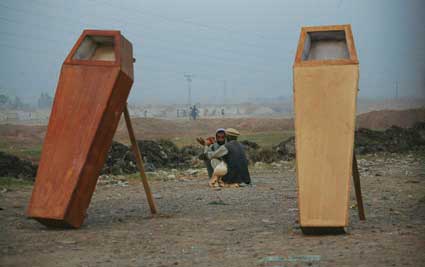
Coffins for sale near a refugee camp in Peshawar
Sickened by the corruption and inefficiency of local authorities, some impoverished Pashtun villagers see the Taliban as Islamic Robin Hoods. In a Maoist-style template, the majority of local Taliban commanders are themselves drawn from the lower levels of Pashtun rural society, and have made efforts to redress the grievances of farming communities by solving the land disputes and blood feuds which blight the region.


- Race To The White House Through The Looking-Glass
- Brexit Gives Us A Historic Opportunity
- American Conservatives Must Stand Up To Trump
- Cicero's Analysis Of Decline Offers Lessons For The West
- Deepdene: Rise and Fall of the House of Hope
- Debunking the EU Referendum Myths
- Britain's Opportunity Is Europe's Warning
- Controlling Immigration Is Good For Democracy
- The Pied Piper of Islington
- The West Cannot Afford To Ditch Nato
- End Of History — Or Clash Of Civilisations?
- We Can Defeat Islamist Terror — But Not On Our Own
- Without the Emperor, What is Left of Old Japan?
- Now Or Never
- Who Will Heal This Divided Country?
- What Made The West Great Is What Will Save Us
- Shock And Awe: Tales Of A Washington Insider
- We Shouldn't Let Old Men Rot Away In Jail
- Arnold Wesker’s Bid To Build A New Jerusalem
- Our EU Deal Gives Us The Best Of Both Worlds

5:02 PM
9:02 PM