


The book is densely packed with information and supplemented by a whole series of statistical tables. Black has done original research, but he has also mastered everything that is worth reading on the subject. The abiding impression given by this book is of clarity, calmness and good sense. There is no whiff of either hysteria or special pleading. Readers can feel confident that they are in very safe hands.
Which is just as well, as the picture that emerges is very complex. When the Inquisition began its work in the 1540s, the main concern was with Protestantism and related beliefs.
This was a tricky business, as the distinction between Catholic and Protestant was much less clear to people at the time than it would become in retrospect. Leading Catholic churchmen were influenced by Erasmian humanism, and were keen to promote a new, more active lay spirituality, emphasising the individual's direct relationship with God and thus, perhaps, de-emphasising some aspects of the Church's role. Cardinal Reginald Pole, the intellectual leader of the English Catholics, and Cardinal Giovanni Morone, the chairman of the final session of the Council of Trent, displayed these tendencies and both were fingered by the Inquisition.
Sometimes when the Inquisitors went after a popular local bishop, they encountered fierce resistance. Sometimes they clashed with secular rulers (especially, but not only, the proud patrician government of Venice) and came off worse. In some cases, grassroots opposition prevailed: in Sicily, for example, an attempt to introduce the Spanish practice of publicly shaming the families of the accused was violently rejected. But in many cases the real difficulties and frictions came, predictably enough, from other parts of the ecclesiastical machine: bishops had their own local jurisdictions to preserve, and did not always react well to keen young Dominican inquisitors parachuted in from Rome.
For what we have to remember is that early modern European states were heavily — but inefficiently — regulated societies. When the flow of Italian "Protestants" dried up, and the Inquisition turned increasingly to offences involving blasphemy, anticlericalism, superstition and sexual misconduct, these were all matters that were regulated by ecclesiastical and secular courts in most parts of Europe. Indeed, as other studies have shown, the attempt to monitor people's private lives could be just as intrusive in Calvinist Geneva or St Andrews as in Catholic Florence or Bologna.
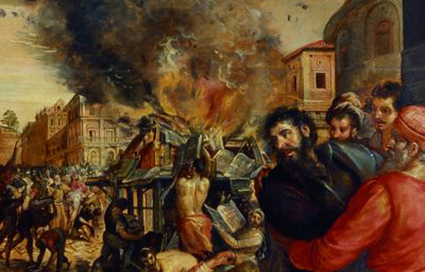
True, the Inquisition's attempts to control the press were much more thorough — and, undoubtedly, more damaging to intellectual life. The number of executions under the Roman Inquisition (perhaps 1,250 for the whole period covered in this book) was certainly greater than the number of executions for heresy in some of the more tolerant Protestant states of northern Europe. But capital punishment was being imposed by secular courts all the time. Offences which, as pious Christians believed, could endanger other people's immortal souls were treated sometimes more leniently than crimes, such as robbery, that harmed only their bodies or their possessions.
Although voluntary appearances before the Inquisition were common (prompted, often, by the suggestion of a confessor), no one would really have wanted to be investigated by it. For the unlucky few, there could indeed be torture and an agonising death. But, if forced to choose between the Inquisition and a secular court, many would have opted for the former. As this book shows, they had good reason to do so.


