


He clearly has a mastery of English, French and German. He is astonishingly well-read. I can’t think of anyone else who would bring in Rowan Williams, Céline, Racine, Mallarmé, G.K. Chesterton, Lenin, the German philosophers and mix them up with the Alien and Star Wars films.
Disparities, however, isn’t a book for civilians. If you’re not up on your Hegel and your dialectical materialism you won’t even get a foothold. (And is anyone really up on Hegel? All that Begriff and Vorstellung, the Handlung and the Tat, or dialectical materialism where theoreticians have wasted their entire lives striving to get even more proletarian.)
Apart from the generous helpings of hefty philosophical structures, Žižek’s trick is to move fast. It’s like the old cups and ball con you see on street corners in which you have to guess which cup is hiding the ball, but Žižek’s legerdemain is so fast, not only do you not know where the ball is, Žižek doesn’t even need a ball. Disparities is a blur of non-sequiturs and weighty quotations used as stun grenades to prevent readers from noticing that nothing much is being said and there’s little coherence between paragraphs.
Take the introduction: Žižek argues that Hegel’s thought is like a kraken, a giant squid that exerts influence from the black abyss. OK, Hegel’s thought has had an important influence on politics and philosophy, not at all obvious to the present-day fresher or man in the street. Then Žižek points out that the “first” philosopher, Thales of Miletus, believed everything was made out of water, you know, where krakens live. Relevance to first analogy? Zero.
Then we are told the “awakened Kraken” that has come to the surface in recent times is “a perfect image of global Capital”. I can go along with the tentacles business, but capital has been around for quite a while, as Karl Marx noted, and I’ve never seen Wall Street as a particularly shadowy, hidden entity. I would have thought a film buff like Žižek would know they have made films about it, many actually called Wall Street. Relevance to first analogy? Zero.
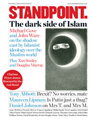
The Kraken is an overriding motif to the book, and Bloomsbury has helpfully put an illustration of a menacing cephalopod on the cover to ram this home. But it’s free association; it’s as if someone asked Žižek to list a dozen things he associates with a large tentacled creature. An interesting, but incoherent jumble.
Disparities, however, isn’t a book for civilians. If you’re not up on your Hegel and your dialectical materialism you won’t even get a foothold. (And is anyone really up on Hegel? All that Begriff and Vorstellung, the Handlung and the Tat, or dialectical materialism where theoreticians have wasted their entire lives striving to get even more proletarian.)
Apart from the generous helpings of hefty philosophical structures, Žižek’s trick is to move fast. It’s like the old cups and ball con you see on street corners in which you have to guess which cup is hiding the ball, but Žižek’s legerdemain is so fast, not only do you not know where the ball is, Žižek doesn’t even need a ball. Disparities is a blur of non-sequiturs and weighty quotations used as stun grenades to prevent readers from noticing that nothing much is being said and there’s little coherence between paragraphs.
Take the introduction: Žižek argues that Hegel’s thought is like a kraken, a giant squid that exerts influence from the black abyss. OK, Hegel’s thought has had an important influence on politics and philosophy, not at all obvious to the present-day fresher or man in the street. Then Žižek points out that the “first” philosopher, Thales of Miletus, believed everything was made out of water, you know, where krakens live. Relevance to first analogy? Zero.
Then we are told the “awakened Kraken” that has come to the surface in recent times is “a perfect image of global Capital”. I can go along with the tentacles business, but capital has been around for quite a while, as Karl Marx noted, and I’ve never seen Wall Street as a particularly shadowy, hidden entity. I would have thought a film buff like Žižek would know they have made films about it, many actually called Wall Street. Relevance to first analogy? Zero.
The Kraken is an overriding motif to the book, and Bloomsbury has helpfully put an illustration of a menacing cephalopod on the cover to ram this home. But it’s free association; it’s as if someone asked Žižek to list a dozen things he associates with a large tentacled creature. An interesting, but incoherent jumble.
Like this article? Share, save or print using the icons below:


4:10 PM