



In the 19th century conflicts were wars between rival states. In the 20th century conflicts between states were driven by rival ideologies. Now, in this century, we are all, in every nation, being drawn into a conflict in which one ideology seeks to abolish states as we have long understood them, liberties as we have long enjoyed them and the idea of the individual on which our civilisation depends.
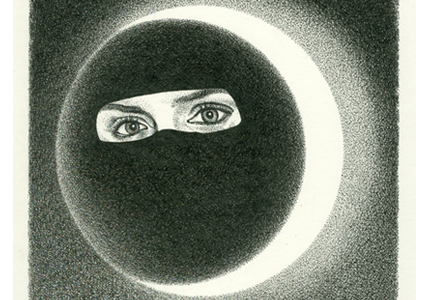 (ILLUSTRATION BY MICHAEL DALEY)
This ideology, while it threatens so much we hold dear, and has influenced so many to acts of violence across our world, is still, despite everything, remarkably poorly understood. This ideology animated the mass murderers of 9/11, inspired the Bali bombing, drove four men to kill 20 times their number in England in 2005, were behind the desecration of the Bamiyan Buddhas, attracted thousands from every nation to become born-again barbarians in the sands of Syria and binds together Hamas and Hezbollah, Abu Bakr al-Baghdadi and the men who ran Birmingham Central Mosque. It is a clear and present danger to so much we hold dear. To counter it, we need to know its doctrines, its animating ideas, the organisations through which it works and the appeals it makes to potential recruits. But that understanding is neither as deep, or widespread, as it needs to be to meet the scale of the challenge. And until we develop that proper appreciation of the scale, and nature, of the threat we will not be able to mount the defence of civilisation that is so vital to the survival and spread of freedom.
The ideology that poses such dangers is Islamism. Not Islam. Islamism.
And it is vital, absolutely critical, that we maintain that distinction.
Islam is a great religion which provides spiritual nourishment and moral guidance to millions. Its essential doctrines — the importance it places on charity and self-discipline, reverence for life and joy in God’s creation — should inspire admiration in people of other faiths and none. Islamic civilisation kept alive classical learning during Europe’s Dark Ages and helped foster scientific and mathematical advances that spurred forward mankind’s progress. Islamic philosophers have provided ways of reflecting on man’s predicament which enrich our understanding of how societies grow and decay. And it should go without saying, but sadly does need to be repeated, that Muslim men and women across the world are inspired to teach, heal, create, lead, support, love and protect their fellow citizens by a love of all mankind.
Islam is one of the world’s youngest faiths, younger by seven centuries than Christianity and, of course, far younger still than Judaism or Hinduism. But it has also been one of the world’s most successful — the purity of its monotheism and the radicalism of its philosophy having proven attractive to many — especially those who have felt a sense of solidarity with the suffering.
Islamism has a very different history, pedigree and appeal.
(ILLUSTRATION BY MICHAEL DALEY)This ideology, while it threatens so much we hold dear, and has influenced so many to acts of violence across our world, is still, despite everything, remarkably poorly understood. This ideology animated the mass murderers of 9/11, inspired the Bali bombing, drove four men to kill 20 times their number in England in 2005, were behind the desecration of the Bamiyan Buddhas, attracted thousands from every nation to become born-again barbarians in the sands of Syria and binds together Hamas and Hezbollah, Abu Bakr al-Baghdadi and the men who ran Birmingham Central Mosque. It is a clear and present danger to so much we hold dear. To counter it, we need to know its doctrines, its animating ideas, the organisations through which it works and the appeals it makes to potential recruits. But that understanding is neither as deep, or widespread, as it needs to be to meet the scale of the challenge. And until we develop that proper appreciation of the scale, and nature, of the threat we will not be able to mount the defence of civilisation that is so vital to the survival and spread of freedom.
The ideology that poses such dangers is Islamism. Not Islam. Islamism.
And it is vital, absolutely critical, that we maintain that distinction.
Islam is a great religion which provides spiritual nourishment and moral guidance to millions. Its essential doctrines — the importance it places on charity and self-discipline, reverence for life and joy in God’s creation — should inspire admiration in people of other faiths and none. Islamic civilisation kept alive classical learning during Europe’s Dark Ages and helped foster scientific and mathematical advances that spurred forward mankind’s progress. Islamic philosophers have provided ways of reflecting on man’s predicament which enrich our understanding of how societies grow and decay. And it should go without saying, but sadly does need to be repeated, that Muslim men and women across the world are inspired to teach, heal, create, lead, support, love and protect their fellow citizens by a love of all mankind.
Islam is one of the world’s youngest faiths, younger by seven centuries than Christianity and, of course, far younger still than Judaism or Hinduism. But it has also been one of the world’s most successful — the purity of its monotheism and the radicalism of its philosophy having proven attractive to many — especially those who have felt a sense of solidarity with the suffering.
Islamism has a very different history, pedigree and appeal.
Like this article? Share, save or print using the icons below:


More Features
- Can Macron Save France — Or Is He Its Undertaker?
- Europe's Revival Is At Hand, Thanks To Brexit
- Is This The Most Important British General Election Since 1979?
- The New Europe Must Be About More Than Money
- Our Best Brexit Policy Is All-Out Free Trade
- The Bursting Of Our 'Kabubble' Fantasies
- Gambling On A Greater More Gracious Britain
- Xi Versus Trump: The Emperor And The Tycoon
- Can Trump Square The Circle On Fiscal Reform?
- Donald Trump And The Dividing Of America
- Theresa May Emerges From Thatcher's Shadow
- Not Tweets And Anger But Redoubled Vigilance
- Why France Is Revolting Against The Ancien Regime
- How The EU Elite Paved The Way For Populism
- Trump's America: The End Of Exceptionalism
- The Kaliningrad Contingency
- Mrs May Is Too Canny To Say Farewell To Arms
- To Understand Trump, Read Huxley — Not Orwell
- A Letter To Our Great-Grandchildren
- Trump Is No Loser, But Government Will Be Harder
Popular Standpoint topics

- Time To Revisit The Two Cultures
- The Battle Against The Philistines Never Ceases
- Who Will Do Justice To Our Judiciary?
- How The EU Elite Paved The Way For Populism
- Trump's Appeal Is More Roosevelt Than Reagan
- Anything Dennett Can Do, Scruton Does Meta
- Why France Is Revolting Against The Ancien Regime
- A Letter To Our Great-Grandchildren
3:04 AM
12:02 PM
5:01 PM
6:01 PM
10:12 PM
7:12 PM
4:11 PM
12:11 PM
4:11 PM
10:11 AM