


The assumptions and values by which we live have been formed in the crucible of the Christian faith and its aftermath, the Enlightenment. This is the result of a quite specific history, and it is not at all necessary that such beliefs and values should arise in or survive in quite different contexts. To argue for the continuing importance of these is not necessarily to argue for the privileging of any Church. It is quite possible to imagine a situation where there is no established Church, but where Christian discourse remains important for public life. For better or for worse, the United States is a good example of such a situation.
The Westphalian consensus is dead. It arose for historical reasons in Europe where it was felt that, for the sake of peace, religion had to be separated from public life. Even then, the identification of religion alone as the decisive factor in the conflict was debatable. We are now, however, in a global context where we will not be able to escape the problems raised by faith for public life. The question, then, is not “should faith have a role in public life?” but what kind of role it should have. Every temptation to theocracy, on every side, must be renounced. There is no place for coercion where the relationship of religion to the state is concerned. But there is room for persuasion; to argue our case in terms of the common good and human flourishing, and to show how these depend on our spiritual vision.


- A Recipe For Disaster
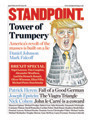
- Culture And Politics In The Age Of Trumpery
- Will Labour Listen To Its Eurosceptic Voters?
- Would Brexit Play Into Putin's Hands?
- Why Brexit Could Be A Blessing For Europe
- Will The Pollsters Get It Right On The Referendum?
- The Great Illusion: Why We Are Still Europe’s Fall Guys
- Make June 23 Britain’s Independence Day
- Don't Pit Generations Against Each Other
- Let Justice Be Done Though The Liberal Heavens Fall
- A Fascist Coup In Poland? Give Us Poles A Break
- It's Sharia, Not Alcohol, That Threatens Women
- Double Games Of The UK Muslim Brotherhood
- The Land Where History Repeats Itself As Tragedy
- Holocaust Survivors Are Still Waiting For Justice
- Rhodes, Race, And The Abuse Of History
- Shame On The Liberals Who Rationalise Terror
- France, Islam, And The Second Class Sex
- Isis Is Not Invincible — If The West Has The Will
- After Paris, Who Will Speak For France?

- Shame On The Liberals Who Rationalise Terror
- Beyond Obama: Advice To The Next President
- The Establishment Is In Denial — Yet Again
- Is There A Right Way To Write?
- The Cowardice Of John Le Carré
- Double Games Of The UK Muslim Brotherhood
- Two Languages And The Chasm Between Them
- Did Burke Betray The Cause Of Liberty?
6:05 PM
2:05 PM
12:05 PM
12:05 PM
11:05 AM