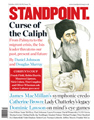



JC: Stalin would limit his banning list to things he perceived as a threat, whereas Mao just banned them summarily. I think Mao really wanted to brutalise the Chinese, dehumanise the Chinese, by depriving them of any intellectual input, and by depriving them of any representation of human feelings.
DJ: Didn’t he toy with the idea of depriving them even of names — just give them numbers, like inmates in a concentration camp?
JC: Yes, he did. In our book there is a photograph of peasants working in a field, carrying a huge number sewn on to the back of their clothes. In 1958 Mao toyed with the idea of getting rid of people’s names, and he mentioned this at Politburo meetings. It wasn’t carried out, partly because it was impractical — there were just too many Chinese!
Another thing that struck me was that under Stalin, at one point there were some 40 composers who submitted entries for the national anthem. Under Mao you can count composers on the fingers of one hand. Mao himself loved Chinese operas, and he had a collection of over a thousand cassettes. He was something of a connoisseur of Chinese operas. Chinese operas are not like Western operas; they are for the masses. Mao knew a lot of regional operas by heart and could talk to opera stars knowledgeably about arias, but again the problem was he wouldn’t allow a billion Chinese to enjoy these operas.
SSM: I think an important part of this was that Mao was the Lenin of the Chinese revolution. Stalin was the second leader. By the time he came to power, there was a return to traditional Russian values. But also Stalin had to do that because, unlike Mao, who was, though Hunanese, truly Chinese, Stalin wasn’t even Russian. Also it was such a multinational empire that it became ever more necessary to Russianise it, and that meant promoting Russian culture, Russian history, to hold the whole thing together. And Stalin thought very hard about this, about creating this new idea of a nationality.
Another point is that the Cultural Revolution was unthinkable for Stalin. The wild disorder of it showed Mao’s immense confidence in his grip on power.
JC: Mao spoke of half the Chinese people being wiped out. He said this had happened several times in Chinese history — and for all his projects to take off, half of China might well have to die. He really meant it, and he said, “if not half of China, let’s say 50 million”. And he wasn’t just talking some sort of ghastly philosophy; he meant it because that’s the basis on which his policies were founded.


- The Socialism of Fools
- The Anti-Elitist Elite Versus the Underclass
- Putting A Value On Human And Animal Life
- American Jews and the Defence of Western Civilisation
- Is China Really a Threat to us?
- Will Germany be a Divided Nation Again?
- Europe, America and the Coalition
- Incurable Romantics
- Staving Off Despair: On the Use and Abuse of Pessimism for Life
- Can the Atlantic Coalition Hold?
- Has Britain Found a Role Yet?
- Life, Death and the Meaning of Cancer?
- Is the Party Really Over for Labour?
- Should Baby Boomers Feel the Pinch?
- Will the Tories Give us the Schools We Deserve?
- What Would Keynes Say?
- How European are the British?
- Speaking Truth Unto the BBC
- Booking a Place in History
- When Britain Feared the Blackshirts

12:06 AM
9:06 AM