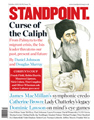



JC: Yes, Mao, I think, learnt this way of administration from Stalin.
SSM: And often people like Lin Piao and Molotov left not really sure what they’d heard. They tried to get it right.
DJ: Is it true that Mao was critical of Stalin for adopting the European and Russian classics, for not just doing away with them completely? He thought Stalin, in other words, had been not ruthless and radical enough?
JC: Mao was much more extreme in destroying Chinese culture than Stalin was. When Mao launched the Cultural Revolution in 1966, he basically wiped out culture from people’s homes. The treasures in the Forbidden City were preserved, but in people’s houses you were not allowed to have anything. I have one thing which miraculously survived, that dish from my grandmother’s collection. But most things were destroyed.
Jon Halliday: Mao is as much different from Stalin as like him in this way. The idea that old was dangerous and should be destroyed was much stronger with Mao. When the Chinese Communists got into Peking, they actually had a meeting of the Politburo to decide whether they should knock down the Forbidden City, and they drew up lists of monuments to be destroyed, and most of the destruction of things like the old city walls, the buildings and so on, was carried out in the 1950s.
SSM: Obviously in the 1920s in Russia there were those ideas about destroying culture, killing priests, blowing up churches, but that really ended in the early 1930s. By then Stalin was becoming increasingly conservative, and his idea of culture was very conservative; so that is a big difference.
JC: Mao was more cynical even than Stalin. Mao actually loved Chinese classics, but the problem was he wouldn’t allow a billion Chinese to read. In his later years his eyesight was failing so he had two factories built to print books with large characters so that he could read them, and the print run of each book was five copies, all for Mao. I don’t think Stalin was doing things of that kind.


- The Socialism of Fools
- The Anti-Elitist Elite Versus the Underclass
- Putting A Value On Human And Animal Life
- American Jews and the Defence of Western Civilisation
- Is China Really a Threat to us?
- Will Germany be a Divided Nation Again?
- Europe, America and the Coalition
- Incurable Romantics
- Staving Off Despair: On the Use and Abuse of Pessimism for Life
- Can the Atlantic Coalition Hold?
- Has Britain Found a Role Yet?
- Life, Death and the Meaning of Cancer?
- Is the Party Really Over for Labour?
- Should Baby Boomers Feel the Pinch?
- Will the Tories Give us the Schools We Deserve?
- What Would Keynes Say?
- How European are the British?
- Speaking Truth Unto the BBC
- Booking a Place in History
- When Britain Feared the Blackshirts

12:06 AM
9:06 AM