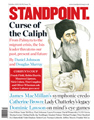



SSM: Well, they both regarded themselves as history personified, and history as a colossal and cruel machine, which they were both riding; which they felt almost represented themselves and their personalities. I don’t know if Stalin really said the famous words about one death being a tragedy and a million being a statistic, but it is very typical of his sort of gallows humour.
JC: I think Mao had really cleared his conscience even when he was as young as 24, when he wrote these notes on a little-known German philosopher called Paulsen. Mao said that whatever satisfies me is automatically moral. He explicitly rejected conscience, and he said conscience is always there “to help you fulfil your desires”. He didn’t regard conscience as something that restrains you. So he was completely untroubled by all these murders and this bloodshed. In his later years he was always crying, but he was always crying for himself because his dreams weren’t fulfilled. He never shed a tear for the 70 million people who had perished under his rule.
Maybe there is a psychological punishment for this kind of total absence of pity and remorse. Mao suffered from intense fear — even at the height of his power. On the eve of conquering China, he developed a severe tremble. He was tall, almost six foot, and he trembled like a leaf when he saw a stranger. Throughout his 27-year rule he lived in his own country as though it were a war-zone; he was constantly afraid of assassination.
SSM: By the post-war period Stalin really was paranoid, but his paranoia wasn’t completely absurd; people were being shot — Lenin in 1918, various ambassadors and Kirov in 1934 — and the more people you killed, the more people there were that hated you. So he had every reason.
Stalin was exactly the same as Mao in his belief that whatever he wanted, whatever he did, was in itself moral, it was for the right, and for the good of the country and the people and the revolution and so on, and he had very little doubt about that, even though he constantly performed huge somersaults of policy and changes of personnel and so on.
But one thing that was perhaps a bit different was that he did have moments of weird, distant regret, not guilt, about people he himself had killed. After the war he used to sit at night on his veranda and talk to people, saying he regretted that various people had been killed by yes-men or forgetfully he’d ask Beria if some individual was alive or not, as if the killings were nothing to do with him and he hadn’t organised the whole thing. And people who were talking to him found that very chilling, and also they were slightly bemused; they couldn’t quite understand it. Also, after the Great Patriotic War, he talked of how every family had suffered tragedy and loss, but whether this was in any way real to him is doubtful. As with Mao, it was always about him. Both his wives died, one in 1907 and one in 1932 — the second was a suicide — and in both cases he collapsed. But really it was about himself, about his own melodrama that he was weeping, and not at all about the person that he’d lost.


- The Socialism of Fools
- The Anti-Elitist Elite Versus the Underclass
- Putting A Value On Human And Animal Life
- American Jews and the Defence of Western Civilisation
- Is China Really a Threat to us?
- Will Germany be a Divided Nation Again?
- Europe, America and the Coalition
- Incurable Romantics
- Staving Off Despair: On the Use and Abuse of Pessimism for Life
- Can the Atlantic Coalition Hold?
- Has Britain Found a Role Yet?
- Life, Death and the Meaning of Cancer?
- Is the Party Really Over for Labour?
- Should Baby Boomers Feel the Pinch?
- Will the Tories Give us the Schools We Deserve?
- What Would Keynes Say?
- How European are the British?
- Speaking Truth Unto the BBC
- Booking a Place in History
- When Britain Feared the Blackshirts

12:06 AM
9:06 AM