



Beyond Kashgar, motorways as smooth as the M4 have been built over the haunting Gobi desert to tie these distant provinces into the Han heartland. Oil platforms and gigantic wind-farms stretch over the wilderness. Supermarkets, skyscrapers and glistening ultra-sleek airports have sprung up in the major cities. China is marching west. Beijing is determined fully to absorb these traditionally Muslim and restless expanses it has long claimed in Central Asia.
Known as Xinjiang, the "new frontier" in Chinese, this rocky wasteland — the country's largest province — extends across more than 1.5 million square kilometres north of Tibet, arcing out to border Russia and five of the 'stans. The Uighurs, unfortunately, live in China's territorial crown jewel. The soil is a treasure-trove of hydrocarbons and minerals.
Xinjiang is as essential to China's geopolitical ambitions and sense of self as Siberia is to the Russians. Without Xinjiang, China would not be able to feed its factories with oil, gas, coal, uranium and gold. These territories hold more than half its proven minerals reserves and more than 80 per cent of the various kinds of deposits present in the country. Without Xinjiang, Beijing would not have been able to open gas pipelines that reach to the Caspian Sea through Kazakhstan or have plugged itself into precious reserves in Turkmenistan. Without Xinjiang, there could be no plans for a railway connecting Beijing to Istanbul to the Trans-Siberian, or pipelines crucial to growth being built to funnel out Russia's oil. Without Xinjiang, there would be no Chinese roads being cut through the mountains and the steppes into the 'stans, flooding the regions with economic produce and Han migrants.
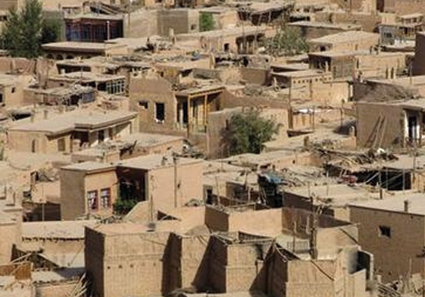
Takeaway: China will replace the old mud huts of Kashgar with a new sparkling metropolis for the Hans
Chinese dynasties have dreamed of mastering the Silk Roads since the third century BC when the first legions traversed the Great Wall during the Han dynasty. Centuries of cyclical protectorates and governorships endured for a few generations each only to be defeated by collapse in the centre, constant Turkic rebellions and the region's fierce geography. Mao, who towards the end of his life explicitly modelled himself on China's founding "Yellow Emperor", Huang-di, was only continuing a long tradition when he launched the Communist Party's "Develop the West" campaign that continues to this day.
The province's recent history begins when it was annexed along with Tibet in the 18th century to the Manchu Qing dynasty's empire. Almost immediately, they fell into a grey zone between suzerainty and outright incorporation. The early 20th century saw the territory descend into anarchy before coming under heavy Soviet influence. For a while, Stalin even toyed with the idea of annexing it himself. Moscow established a base in the region and Russian workers heavily influenced the evolution of the Uighur language, which adopted the words for both a train and China itself — symbolic of how far the territory had spun from Beijing's orbit. In the late 1940s, a Soviet-inspired East Turkestan Republic flickered into life.


- Beirut: Hariri — An Assassination Too Far
- New York: A ‘Post-racial’ American vs an Old Coot
- Pristina: Kosovo's Liberal Islam
- Oslo: Courage and Cowardice in Scandinavia
- ONLINE ONLY: Washington, D.C.: It's Not Rocket Science!
- La Hague: Recycling the French Model
- Jerusalem: No Via Media for Anglicans
- ONLINE ONLY: Beirut: Blood Holiday
- Rome: Arrivederci Roma
- Darfur: Panic at the Palace
- ONLINE ONLY: Letter from Bamian
- Caucasus: Diary, August-September, 2008
- ONLINE ONLY: South-East Asia: The Demons of Ignorance
- New York: Diary
- Ypres: Never Say Never Again
- New York: A Cousin in the White House
- Caracas: Chávez's Secret Fan Club
- Prague: Diary
- Park City, Utah: Movie that Pulls Aside the Veil
- Beirut: Blood on the Streets
- India: Tariq Ali's Plan for Pakistan
- Berlin and Cologne: A Tale of Two German Cities
- Mumbai: On the 'Slumdog' Trail
- Budapest: Screwed Left, Right and Centre
- Paris: Mayhem in the Marais
- Stanford, CA: Intellectual Life Under Obama
- Colombia: A Nation Reborn
- Paris: Prisoner of the Barbarians
- United States: The Path to Rome via San Francisco
- ONLINE ONLY: Black Russian
- South Africa: The ANC'S Health Lesson for Obama
- Lisieux, France: Relics of Thérèse
- Germany: Heidegger - Being, Time and Place
- Moscow: Putin's Empire Strikes Out
- Connecticut: My Battle Against Google
- Montana: Home From Home on the Range
- Siberia: In Search of the Gulag
- Rio's Heart of Darkness
- Mogadishu: Armageddon on Steroids
- Havana: The Castros Will Not Be Absolved
- Kaliningrad: Russia's Outpost in Europe's Heart
- Bishkek: Bloodsoaked Revolution
- Bishkek: Downfall of a Dictator
- Oslo: Signing OFF on Human Rights
- Bajaur: A Talk with the Taliban
- Bahrain: Women Drivers Welcome Here
- Tajikistan: In Search of the Yeti
- ONLINE Only: Ankara's Proxy
- Johannesburg: Hard Pressed
- Istanbul: Press Freedom Alla Turca
- Xinjiang: Taming China's Wild West
- The Lesson of Oz
- The Surge is Working — So Far
- A Tale of Love, Bulls and Goats
- Old-order Collapse
- Egypt's New Dawn Chorus
- From Carthage to Kasserine
- After Gaddafi: A New Libya Emerges
- To the Polo Saddle Born
- The Settlements: Life Between the Lines
- Exposed: Carnita's Cover Story
- "At last, I feel proud to be Libyan"
- Books Do Furnish a Little Freedom
- Fat Chance for Christie—This Time
- Easy Lies the Head that Wears the Crown
- Putin's Chinese Whispers
- Cain Isn't Able and Newt Defies Gravity
- The Ten Years' War against the Taliban
- We The People Say: Get Out of The Way
- Wanted: A New Ronald Reagan
- Time to Crunch the Numbers
- Who's Really Supreme?
- From Art as Life to Blood and Soil
- Talking Tactics
- The Wagner Family Soap Opera Rolls On
- Winning the Veepstakes
- Romney Takes a Risk with Ryan
- Window Brothels Get the Red Light
- Can Romney Spring an October surprise?
- Canada's Crusader for Conservatism
- No-Go Areas on the Campaign Trail
- Republicans Must Avoid Civil War
- Norway's Problem with Anti-Semitism
- Turks, Arabs and Jews: The Middle East in Crisis
- Nations United in Hypocrisy
- Siberia: Shamans, Spies and the Secret Police
- Barracked by Obama's Oratory
- Women Come Last in Syrian Refugee Camps
- The Dawn of Obamageddon
- Americans Know Her True Worth. Do We?
- Hapless Hollande’s French Farce Flops
- Save the NYPD So It Can Save the City
- Obama's Secrets Start Unravelling
- Syria Isn't Bosnia: Don't Arm the Rebels
- Who Can Stop Hilary in 2016?
- Teaching China's Anglophiles
- On Pilgrimage with the Hasids
- From Eastern Europe to the East End
- True Grits
- The Rise and Rise of Marine Le Pen
- Cold Comfort On Global Warming
- Hunting the Lynx with the Old Believers
- High-tech Israelis Aim For The Moon
- The Russians Are Coming
- The Turbulent Minister is Right
- Bad Times for Good Samaritans
- This Expat Paradise is a Woman’s Nightmare
- Two Generations Lost to Communism
- Strangers in their own Holy Land
- The Isles are Full of Big Noises
- The Kurds: Israel's not so Improbable Allies
- Islam and Innocence: Canada’s Predicament
- The Fifth Republic’s Darkest Days?
- Let's Make Putin's London Cronies Sweat
- The Global Politics Of Netanyahu's Victory
- A Grim Prospect For South Africa's Jews
- No End In Sight To The Exodus From Libya
- Undeterred, Erdogan Usurps Ataturk's Legacy
- Gaza Withdrawal Symptoms
- Red Flags Flying Over Parliament Square
- Mutinous Talk In The Highlands
- Our Principles Are All We Have
- Why The Swedes Have Had Enough
- Canada's First Nations Come Last
- Islam and the French Republic
- Unconventional Convention
- The Dying Days Of Zuma's South Africa
- I'm Not Antisemitic, But...
- The ELM, Dispatches and Awlaki
- A Larger Than Life Predator

8:10 PM