


At any rate, popular and elite perceptions of the EU ran in different directions in the 25 or so years that followed the Single European Act. Most British people were angered and alienated by the EU's encroachment on their ways of life, whereas the majority of those involved in government felt increasingly at ease with or even applauded the expansion of "Europe". The Europhile governing elite included politicians, civil servants and what might be termed "the clerisy". (The term, originated by Coleridge, refers to state functionaries plus their affiliates, such as the heads of quangos, top academics and leading newspaper pundits.) Whereas opinion polls began to show a clear margin in favour of leaving the EU, the commitment of the established political parties to EU membership became more definite. In the 2010 general election all three of the "main" parties were in favour of continued EU membership, indifferent to the growing Euroscepticism of the British public.
The widening of the space between popular and elite opinion could not go on forever. UKIP's spectacular recent achievement is to have met the demand for an anti-EU political vehicle. A string of by-election results since Corby in November 2012 and the recent English county council elections shows that it has captured the political loyalties of a significant proportion of the electorate. The European issue is not the only one that explains the shift to UKIP, but it is dominant in forging the party's distinctiveness and its appeal. The extent of UKIP's latest successes have been almost wholly unexpected by the clerisy and the commentariat. In the middle of last year not one of Britain's political editors foresaw the imminent leap in UKIP support or anticipated that in early 2013 David Cameron would be under such pressure that he would feel obliged to promise an In/Out referendum on EU membership.
An extraordinary feature of the UKIP phenomenon is that, at a national level, the party operates on a budget less than the bonus of many City traders. Its membership subscriptions have for several years run at under £400,000. Electoral Commission statistics show that donations totalled £325,957 in 2011 and £314,410 in 2012. By contrast, in the last two years donations to the Conservatives came to about £14 million a year and to Labour about £12 million. UKIP has relied on hard work by local activist volunteers. The clerisy and the commentariat may mock, but the by-election campaigns since Corby show that the established parties cannot mobilise the same number of supporters at key electoral tests.
What now follows? Sooner or later a referendum on EU membership is inevitable, and current opinion polls suggest that the vote will be to leave the EU. UKIP is of course in favour of a referendum and wants it to be held as soon as possible. But a case can be made that the longer a referendum is delayed, the more decisive and better the result will be. The Conservatives are rattled, with the newspapers full of rumours of an electoral pact of some sort. But, by promising a referendum, Cameron has lost the best bargaining chip he might have offered to UKIP. It may now seem ancient history, but may we recall that before the 2010 general election there was talk of a deal? In that deal UKIP would not oppose Conservative candidates at all if Cameron agreed a referendum on the Lisbon Treaty. Circumstances have changed dramatically. In 2013 UKIP stood for hundreds more local government positions than before 2010, while Cameron has conceded an In/Out referendum.


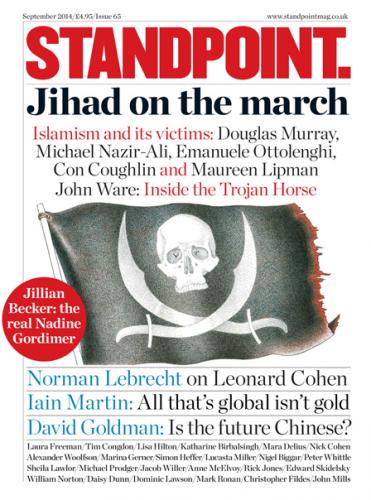
- The Plot to Islamise Birmingham’s Schools
- Nigeria, Iraq, Gaza—The Threat is the Same
- Radical Islam and its Invisible Victims
- The Man Who Tried to Teach us all a Lesson
- Globalisation and The Crisis of the Nation State
- The Medium Isn’t Always the Message
- What sort of Europe does Cameron Want?
- Is China outstripping the West at innovation?
- Piketty’s panacea will make inequality worse
- The Moral Strength of Leonard Cohen
- Designer who taught us to keep it simple
- The US Can Still Help Save Syria — and Iraq
- Russian Resurgence has Blindsided Nato
- On Europe, Nothing Less than Treaty Change will do
- Putin has his Useful Idiots on the Left and the Right
- Sarajevo: Where the Century of Terror Began
- Allen Lane’s Pelicans Take Wing Once More
- How Not to Remember the First World War
- Opera is Not Just Our Most Expensive Noise
- Jonathan Miller: One Man, Two Cultures

2:06 PM
9:06 AM
8:06 AM
10:06 PM
11:06 AM
12:06 PM