


It is difficult to see how a pact can be agreed between UKIP and any other party before the 2015 general election. As UKIP is in an immeasurably stronger position than in 2010, an alliance with another party makes sense only if the non-UKIP party accepts that it must stand down in several seats and make way for UKIP candidates. That is not going to happen. Anyhow UKIP leader Nigel Farage and David Cameron loathe each other, and have made no secret of their mutual distrust. The probability has to be that in 2015 UKIP will fight all three of the other parties. To the extent that UKIP and the Conservatives were to split each other's votes, that would lead to Labour securing a large parliamentary majority. Since Ed Miliband has rejected the idea of an EU referendum, Cameron's pledge of a referendum in 2017 would prove redundant whether or not it were "enshrined in law".
From the standpoint of those committed to the UK's exit from the EU, does that matter? The case for a referendum has long suffered from an obvious practical difficulty: how would events play out if a pro-Out vote in a referendum were recorded under a pro-In government? Given that UKIP is the only party that unreservedly backs withdrawal from the EU, and given also that UKIP may struggle to achieve substantial parliamentary representation in 2015, a no vote under a yes government is all too plausible.
Cameron plainly envisages that he will still be Prime Minister in 2017 and hence would be the man charged to implement the result of the referendum. He does not bother to hide his view the UK must remain inside the EU after a renegotiation, however trivial the benefits. How would UKIP's rank and file feel if they had worked hard to obtain a "no to the EU" vote in a bitter and exhausting referendum campaign, only for Cameron and his associates to betray the vote? Alternatively, suppose that Cameron has been replaced by Miliband in 2015 and that Miliband has somehow been forced to hold an In/Out referendum against his own wishes. Suppose again that the referendum result is "no to the EU". What is the betting that Miliband would treat the referendum result with contempt? Surely he would do everything in his power to ensure that the UK remained, for all intents and purposes, an EU member state subject to the single market's acquis.
Most elements of the UK government machine want Britain to stay inside the EU. Someone has to write the speeches, draft the legislation, take the phone calls, organise official diaries and so on, and the ability of the civil service, the clerisy and the commentariat to frustrate the UK's exit cannot be underestimated. If they want the UK in the EU, regardless of Daily Mail leaders and UKIP's support in the C and D social groups, they can cause a lot of trouble. The claim that in contemporary Britain the democratic will can be obstructed so wilfully may seem far-fetched. But the handover of competences since 1986 has been largely the work of bureaucrats operating without effective democratic check. Thatcher herself complained that she had been misled by the Foreign Office about the true implications of the Single European Act. In 2003 Christopher Booker and Richard North published a book, The Great Deception, chronicling the lies, tricks and chicanery perpetrated by Europhile officialdom. Naive politicians and the general public were easily hoodwinked.


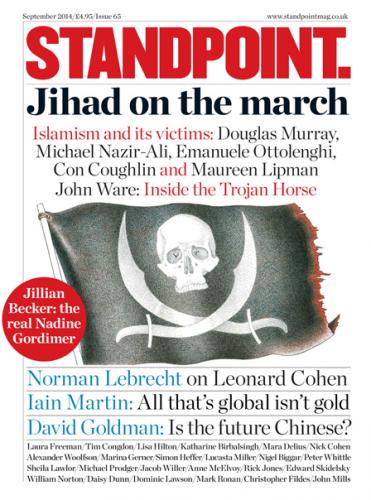
- The Plot to Islamise Birmingham’s Schools
- Nigeria, Iraq, Gaza—The Threat is the Same
- Radical Islam and its Invisible Victims
- The Man Who Tried to Teach us all a Lesson
- Globalisation and The Crisis of the Nation State
- The Medium Isn’t Always the Message
- What sort of Europe does Cameron Want?
- Is China outstripping the West at innovation?
- Piketty’s panacea will make inequality worse
- The Moral Strength of Leonard Cohen
- Designer who taught us to keep it simple
- The US Can Still Help Save Syria — and Iraq
- Russian Resurgence has Blindsided Nato
- On Europe, Nothing Less than Treaty Change will do
- Putin has his Useful Idiots on the Left and the Right
- Sarajevo: Where the Century of Terror Began
- Allen Lane’s Pelicans Take Wing Once More
- How Not to Remember the First World War
- Opera is Not Just Our Most Expensive Noise
- Jonathan Miller: One Man, Two Cultures

2:06 PM
9:06 AM
8:06 AM
10:06 PM
11:06 AM
12:06 PM