


But while these changes have been controversial, the most supportive voices have been those of teachers. Teachers like Tom Bennett, Andrew Old, Daisy Christodoulou and Standpoint's own Matthew Hunter, have taken to the web and Twitter to support the changes we have been making — in defiance of their unions — and have won massive followings.
Indeed, the most encouraging trend of the moment in education is that the people pressing for change most determinedly are not politicians, but teachers. And that's as it should be — because our policies are designed to enhance the prestige of the profession, restore the lustre attached to academic study and give teachers the chance to lead change in education.
Perhaps the most powerful demonstration of that is the Free School programme — which allows idealistic teachers to set up their own state schools in communities that have been poorly served by existing schools. Teachers — like former Standpoint columnist Katharine Birbalsingh, or Mark Lehain at Bedford Free School, or the team behind Greenwich Free School — are in the vanguard of change.
Free schools provide parents with choice they've been denied by local bureaucratic monopolies, challenge existing schools to raise their game, and they provide an opportunity for idealistic teachers to bring the sort of education the rich have always been able to buy for their children to communities which have been shortchanged in the past. Already the first 24 free schools are out-performing other state schools and are massively oversubscribed.
Free schools are a dramatic demonstration of the growing determination among more and more teachers to set higher expectations for students. But they're not the only evidence of a new culture of greater ambition for all children.
Alongside the growth in free schools there has also been a big increase in the number of academies. As the name suggests, academies are schools freed from bureaucratic control to concentrate on becoming successful academic institutions. As Tony Blair explained in his memoirs, an academy "belongs not to some remote bureaucracy, not to the rulers of government, local or national, but to itself, for itself. The school is in charge of its own destiny. This gives it pride and purpose. And most of all, freed from the extraordinarily debilitating and often, in the worst sense, politically correct interference from state or municipality, academies have just one thing in mind, something shaped not by political prejudice but by common sense: what will make the school excellent."


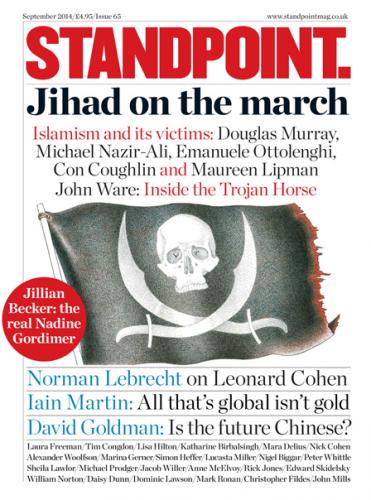
- The Plot to Islamise Birmingham’s Schools
- Nigeria, Iraq, Gaza—The Threat is the Same
- Radical Islam and its Invisible Victims
- The Man Who Tried to Teach us all a Lesson
- Globalisation and The Crisis of the Nation State
- The Medium Isn’t Always the Message
- What sort of Europe does Cameron Want?
- Is China outstripping the West at innovation?
- Piketty’s panacea will make inequality worse
- The Moral Strength of Leonard Cohen
- Designer who taught us to keep it simple
- The US Can Still Help Save Syria — and Iraq
- Russian Resurgence has Blindsided Nato
- On Europe, Nothing Less than Treaty Change will do
- Putin has his Useful Idiots on the Left and the Right
- Sarajevo: Where the Century of Terror Began
- Allen Lane’s Pelicans Take Wing Once More
- How Not to Remember the First World War
- Opera is Not Just Our Most Expensive Noise
- Jonathan Miller: One Man, Two Cultures

4:10 PM
12:10 AM
11:10 PM
12:10 PM
11:10 AM
11:09 PM
3:09 PM
3:09 PM