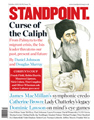



As the title of his book implies, Geert Wilders and his family have lived under the shadow of death ever since the ritual murder by an Islamist of Theo van Gogh eight years ago on an Amsterdam street. By comparing the Koran to Mein Kampf and insisting that Islam be treated as a totalitarian ideology every bit as dangerous as Nazism or Communism, Wilders has not only sacrificed his own liberty, but forced his countrymen to choose whether or not to protect his right to free speech. In 2008 he provoked an outcry with his anti-Islamic film Fitna and he later stood trial in Amsterdam for incitement to hatred and discrimination. Though he was acquitted, he is routinely referred to as "far-Right" in the Western media. In fact he comes from an anti-Nazi family, is an outspoken philosemite and (like his friend Ayaan Hirsi Ali) belonged to the centrist People's Party until he left to form the Party for Freedom, which is now the third-largest Dutch party. Many of his policies — limiting immigration, dismantling multiculturalism and supporting Israel — have now been adopted by the Dutch mainstream.
One episode recounted in his book should be a source of shame for free-born Englishmen. In 2009, Wilders was invited to Westminster by two British peers for a screening of his film. Britain's first Muslim peer, Lord Ahmed, objected, claiming that Wilders's mere presence "would lead to the incitement of religious and racial hatred". Ahmed later denied threatening to bring 10,000 Muslims to Westminster but the Labour government caved in to his bullying. The Home Secretary, Jacqui Smith, banned Wilders from entering Britain as a danger to "community harmony" and "public security". Wilders came anyway, but was arrested and deported, despite a formal protest from the Dutch government. The ban was overturned by a British tribunal and Wilders returned, to be greeted by about 40 Islamists hurling abuse and chanting: "Freedom go to hell." There was, however, no riot.
Britons should be ashamed of the fact that the threat of violence and intimidation apparently carries more weight with our authorities than freedom of speech. As Lewis says, Muslims may care more about justice than freedom. But justice demands that we listen to those with important, if often unwelcome, things to say — including Dick Cheney's octogenarian orientalist and the latter-day flying Dutchman.


