


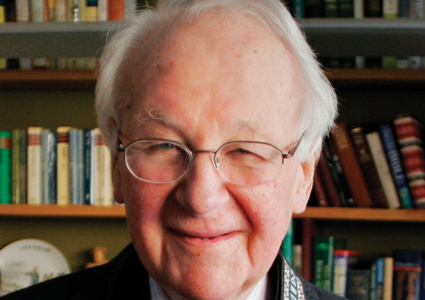
The "Evangelical Pope": The late Reverend John Stott
The death of an international figure often invites a raft of revisionism: an effort to interpret the person's legacy in terms that suit political or ideological prejudices. Recent commentary over the passing of an evangelical leader, the Reverend John Stott, exemplifies this vice, perhaps most grievously in an essay by New York Times columnist Nicholas Kristof. Whatever the intent, it was a "tribute" typical of those that degrade rapidly into mere propaganda.
A longtime Anglican minister at All Souls, Langham Place in London's West End, Stott was one of the world's most influential figures in evangelical Christianity over the past half-century. He was a key framer of the 1974 Lausanne Covenant, a touchstone document in the rise of global evangelicalism. He wrote nearly 50 books, and his preaching and teaching reached beyond England and the United States into the developing world. He died in July at the age of 90.
But to suggest, as Kristof and others have done, that Stott interpreted the mission of Jesus as a call to social justice — as if Christ was crucified for his jeremiads against global warming — is to belittle the heart and soul of his ministry.


Post your comment
- Plus ça change
- Eggs Florentine
- Sour Smell Of Success
- An Odyssey To Athens
- Elegy For Gray
- Inside The Club
- From Gibbon To Pocock
- Remembering Sir Martin
- Pension Pot Luck
- Drawing A Line
- Literary Lights
- Cooking the Books
- What Putin Wants
- Shalom Julie
- Roman Tax Dodgers
- Gehry's Middle Finger
- Brown v. Oxford
- Minister for what?
- Take a Bow
- Illiberal consensus

- The Loss Of Faith Made Music Mute
- The Great Betrayal: How Liberals Appease Islam
- Political Correctness Is Devouring Itself
- The New Language Of Political Narcissism
- Why The World Still Loves Shakespeare
- Don’t Listen to Britain’s Designer Demagogues
- Who's in Charge of BBC News?
- An English parliament: the only way to save the UK
- The Loss Of Faith Made Music Mute
- The Great Betrayal: How Liberals Appease Islam
- Political Correctness Is Devouring Itself
- The New Language Of Political Narcissism
- Why The World Still Loves Shakespeare
- Don’t Listen to Britain’s Designer Demagogues
- Who's in Charge of BBC News?
- An English parliament: the only way to save the UK
- The Loss Of Faith Made Music Mute
- The Great Betrayal: How Liberals Appease Islam
- Why The World Still Loves Shakespeare
- Who Will Lead The Berlin Band?
- Putin and the Art of Political Fantasy
- Political Correctness Is Devouring Itself
- The New Language Of Political Narcissism
- Inside The World Of 'Non-Violent' Islamism