


Hugh Trevor-Roper: A member of the last generation in England to take letter-writing seriously
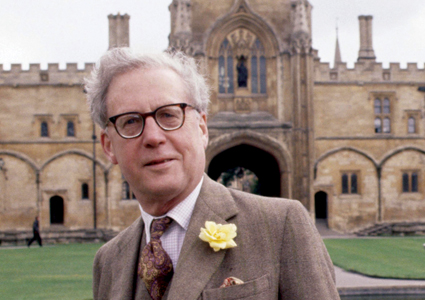
Hugh Trevor-Roper was a case of redemption by misfortune. Brilliantly gifted, for most of his life he devoted himself to careerism, social climbing and the exercise of virtuoso malevolence. As such, he flourished mightily. Then fortune turned sour. But from his sufferings a new man emerged, more sensitive, softer, gentler, and his end — aged, lonely, blind but with his formidable intelligence still intact — was strangely edifying. This moral tale can be traced in his letters, of which this is a superb selection.
Trevor-Roper belonged to the last generation in England which took letter-writing seriously. He was a self-conscious stylist and composing letters was for him an arduous duty and delight. These include a number of set pieces: a wonderful description of Iceland, another on the floods of 1947, two brilliant evocations of Greece, a third of Jerusalem, and a startling glimpse of the student riots of 1968 at the LSE. But there are also letters to a wide variety of correspondents, famous and obscure, about a great variety of subjects. The book makes a hugely entertaining volume, and since Trevor-Roper published little, a propensity he shared with his enemy at Magdalen, K.B. McFarlane, it should be treated as a salient part of his oeuvre.
Trevor-Roper began his career with an explosion of success. By good fortune, he was given by the authorities the job of writing up Hitler's end. He did this with such skill and verve that The Last Days of Hitler became an international bestseller. It enabled him to buy a Rolls Royce, take up fox-hunting and become the smartest don in Oxford. He also, in due course, married the daughter of an earl, admittedly an ennobled general, Douglas Haig, who sent so many gallant volunteers to their deaths. It is a relief, as we learn from a letter to Alan Clark, author of that denunciation of the brass-hats, The Donkeys, that Trevor-Roper was a covert anti-Haig man.
What exactly were his relations with Xandra, as she was known, is not clear, though they wrote each other many letters. "I give my heart to you," he enthused. But one of their hostesses told me they insisted on having separate bedrooms and, if possible, bathrooms too. In time, Xandra became a sardonic critic of Trevor-Roper's inability to produce the masterpiece which he boasted he was about to finish. "I am now writing a huge book in three volumes," he crowed. But no such work appeared. Xandra commented: "Our attic is crowded with Chapter Ones. Never a Chapter Two."
Despite this, Trevor-Roper continued to prosper. In 1957, Harold Macmillan, a prime minister he had cultivated, made him Regius Professor of History, a prize which rightly should have gone to A.J.P. Taylor. In time a life peerage was added by his Tory friends, for which he impudently chose the ancient title of Dacre. He gave up hunting and contrived to sell his horse during a tutorial (the new owner was a Baring). He had a genuine dislike for the low-born, the source of his otherwise inexplicable detestation of A.L. Rowse. "Poor old Rowse," he wrote. "I fear he has never really transcended his social origins. That tongue which shoots out with such chameleon agility towards a ducal posterior, never uncoils, in our little republic of letters, except to discharge the hoardings of a parish scold." He dismissed Mrs Thatcher's invaluable colleague, Norman Tebbit, one of the nicest men in England, who had risen from the ranks, as "a thug". He delighted in ingenious pieces of research, such as his discovery that his colleague "The Prof", Professor Lindemann, was the son of a man who owned the Dresden waterworks. For social purposes Trevor-Roper was an Anglican but regarded Christianity as inferior to Judaism or even Islam. He had a particular detestation of Catholics, especially converts. The genial Frank Longford, who would go the length of England to help a poor ex-criminal in distress, he dismissed as "an ass", and he treasured a letter from Lord Birkenhead denouncing Evelyn Waugh in unmeasured terms, though would not refer to it publicly for fear of "incurring the insane malice of his son", Auberon Waugh.
Like this article? Share, save or print using the icons below:


- Why On Earth Should Anyone Study Philosophy?
- The Dying Days Of Zuma's South Africa
- His Master's Voice: Scruton On Wagner
- Why The Most Civilised Of Men Felt Like A Fraud
- Political Misconduct
- Cicero's Analysis Of Decline Offers Lessons For The West
- The Dead End Of Identity Politics
- Trump's Appeal Is More Roosevelt Than Reagan
11:04 AM
12:03 AM
11:03 AM
3:03 PM
3:03 PM
11:03 AM
10:03 AM