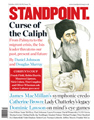



Is it not remarkable that in the European Union (which some call Eurabia) so many government leaders and officials are eager to pronounce their abhorrence of racism, anti-Semitism, Islamophobia and xenophobia, though levels of Jewish anxiety about Jew-hatred have never been so high since 1945? Is it not ironic that the memory of the Holocaust is so frequently and respectfully evoked - especially by European politicians, intellectuals, academics, journalists, churchmen and shapers of opinion - at the very time when Israel-bashing has become a Europe-wide popular sport which has achieved global resonance? And how is it that the UN solemnly commemorates the Shoah yet remains - despite some improvements - a world forum for vicious anti-Zionist incitement against Israel?
There is no single, monolithic anti-Semitism that we face in all these cases, but rather a cluster of loosely related phenomena - some of them irritants of the common cold variety and others potentially lethal. I do not believe there is a single master strategy to deal with these disparate ailments. But establishing priorities is clearly important. One obvious point is that we have to take into account national differences - the specific challenge in each country will necessarily reflect its history, culture, politics and the character of its Jewish communities. Another is that Jews cannot fight anti-Semitism alone - they need allies who will change response to the specific type of anti-Semitism and the conditions prevailing in a given society.


- Liberty And Sovereignty
- Art And Public Culture In The 1830s And Today
- The Casanova Of LaSalle Street
- The Writer
- New Poetry
- Cartagena Poems
- A British Subject
- Travels with Betjeman
- Kizerman and Feigenbaum
- Communism’s Comeback?
- Irving Kristol on Jews and Judaism
- The State of Charity
- Teeth
- La Buena Muerte
- Judaeophobia
- Cool It
- Rachmones
- From 'Russia'
- 'Going Out' and Five Other Poems
- The Final Edition

9:11 AM