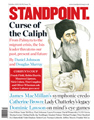



Strangling was the second rabbinic innovation without scriptural precedent. Herod the Great used it against members of his family. Hyrcanus II, the grandfather of his wife Mariamme, and two of his sons by Mariamme, Alexander and Aristobulus, were the victims of this kind of execution. The Mishnaic strangulation, like burning, entails the immobilisation of the condemned in dung, with the two witnesses acting as executioners by pulling the rope until the condemned's breathing stopped.
Why did the rabbis introduce this new manner of execution? Paul Winter came up with the interesting suggestion that after 70 CE, when Rome no longer granted capital jurisdiction to Jewish tribunals, strangling, unlike stoning, could be performed in secret. He notes that as late as the middle of the third century CE, the Church Father Origen (c. 185-254 CE) mentions that Jewish courts continued to condemn and execute criminals in a half-secret, half-open manner. "Trials are held secretly according to the Law," he writes in his Letter to Julius Africanus (§20), "and some are condemned to death. This is done neither in complete openness, nor without the knowledge of the [Roman] ruler."
From the beginning of the Common Era, crucifixion as a form of death penalty was lurking in the extant Jewish literature, but for a combination of reasons was swept under the carpet. It evoked bitter memories among Jews during the late Second Temple era, when many patriotic inhabitants of the Holy Land ended their lives on Roman crosses. We learn from Josephus that the violent repression of the rebellion which followed the death of Herod the Great (4 BCE) involved mass crucifixions, 2,000 in one case, ordered by the general of the Roman forces, Varus, the governor of Syria.
During the final stages of the siege of Jerusalem in 69-70 CE, when crowds of rebels sought to escape from the city, no fewer than 500 captured Jews were crucified every day so that, to quote Josephus, "there was not enough room for the crosses and not enough crosses for the bodies". Whether the remains of a crucified man whose bones were discovered in Jerusalem in 1968 in an ossuary inscribed with the name of Yohanan son of Ezekiel were one of these we cannot say, but the nail piercing his anklebone, to which bits of olive wood are still attached, and his broken shinbones clearly indicate how Yohanan died.


- Liberty And Sovereignty
- Art And Public Culture In The 1830s And Today
- The Casanova Of LaSalle Street
- The Writer
- New Poetry
- Cartagena Poems
- A British Subject
- Travels with Betjeman
- Kizerman and Feigenbaum
- Communism’s Comeback?
- Irving Kristol on Jews and Judaism
- The State of Charity
- Teeth
- La Buena Muerte
- Judaeophobia
- Cool It
- Rachmones
- From 'Russia'
- 'Going Out' and Five Other Poems
- The Final Edition

12:04 PM
1:04 AM
2:04 PM