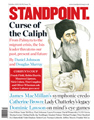



The clever gambit worked. Octavian replaced the diadem on Herod's head with the words:
So staunch a champion of the claims of friendship deserves to be ruler over many subjects...Antony did well in obeying Cleopatra's behests rather than yours; for through his folly we have gained you.
From then on, Herod became one of Augustus's best friends, second only to Marcus Vipsanius Agrippa. This friendship was marred only once, in 7 BCE, during Herod's conflict with the Nabateans. The war was considered unauthorised by the emperor, but the tactful diplomacy of Nicolaus of Damascus ironed out the misunderstanding.
Generally speaking, loyalty and gratitude are virtues definitely to Herod's credit. He never rebelled against Hyrcanus and proved a devoted friend of Mark Antony through thick and thin. As Augustus's client king, his fidelity to the emperor remained steadfast to his death. Even though no favour could be expected in return, in his last will Herod left Augustus ten million silver coins as well as gold and silver vessels and luxurious articles of clothing; he also bequeathed to the empress Julia five million pieces of silver. To see these legacies in proportion, he left his beloved sister Salome only 500,000 silver coins.
In the domain of social policy, Herod could be harsh to his Jewish subjects, confiscating the wealth of rich opponents and collecting tributes with moderate severity from the general population. However, he was sometimes remarkably generous towards the needy. At the time of a great famine in 24-23 BCE, Herod did all he could to rescue his people. Being without ready cash to purchase food in Egypt at inflated prices, he sold all the gold and silver objects in his possession and fed the starving at home and even in cities beyond the frontiers of his kingdom. We learn from Josephus that twice he substantially reduced taxes (by one third in one case and by a quarter in another) to help the stricken economy to recover. Yet once he admitted that he never felt totally at home with Jews and preferred the more congenial company of the Greeks.
In fairness to Herod, one must also stress that thanks to him Judea became a richer, more civilised and definitely more beautiful country. In particular, Caesarea greatly contributed to the growth of international commerce and his great architectural projects provided employment and improved the circumstances of large segments of the working population of his kingdom.
Herod excelled in the promotion of culture, both Jewish and Hellenistic, especially through grandiose architectural projects. Jerusalem and the countryside were transformed and became incomparably more pleasant to live in after Herod than before his reign. Profoundly devoted to his Idumean family, he erected the cities of Antipatris on the coastal plain, Cypros and Phasaelis in the region of Jericho, to perpetuate the names of his father, mother and elder brother.


- Liberty And Sovereignty
- Art And Public Culture In The 1830s And Today
- The Casanova Of LaSalle Street
- The Writer
- New Poetry
- Cartagena Poems
- A British Subject
- Travels with Betjeman
- Kizerman and Feigenbaum
- Communism’s Comeback?
- Irving Kristol on Jews and Judaism
- The State of Charity
- Teeth
- La Buena Muerte
- Judaeophobia
- Cool It
- Rachmones
- From 'Russia'
- 'Going Out' and Five Other Poems
- The Final Edition

1:06 PM
2:02 PM
2:01 PM
10:01 AM
10:01 AM
11:01 AM
12:01 PM
4:01 PM
10:01 AM
10:01 AM