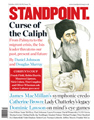



Herod was born between 74 and 72 BCE into a leading Idumean family. The Idumeans, who lived south of Judea, were forcibly converted to Judaism by the Hasmonean ruler, John Hyrcanus I, in the 120s BCE. Herod's grandfather Antipas and his father Antipater held high offices in the Hasmonean kingdom: the former was governor of Idumea, and Antipater acted as military aide and political adviser to the priestly ruler, Hyrcanus II (63-40 BCE). Antipater and his young son rose to prominence in the stormy days of the Roman republic, first under the leadership of Pompey, the conqueror of Jerusalem in 63 BCE, and then under Julius Caesar after Pompey's defeat in 48 BCE. They both gained Roman citizenship.
We have no record of Herod's childhood and upbringing, though it may be assumed that he learned Greek. Remarkably, his main education came late in life from the already mentioned Nicolaus of Damascus, who joined his court in 14 BCE when Herod was nearing 60. In a surviving passage of his autobiography, Nicolaus records that Herod's first enthusiasm was for philosophy, then he preferred rhetoric which he practised with his teacher.
Next he fell in love with history and bullied Nicolaus to complete his universal history. Finally, when he sailed to Rome to meet Augustus, he took Nicolaus with him to discuss philosophy.
Herod first revealed his strong arm in 47 BCE when, appointed governor of Galilee by his father, he cleared the country of brigands. After Caesar's violent removal three years later, Antipater and Herod collaborated for a short while with Cassius, one of Caesar's murderers, who took over Syria. In 43 BCE, Antipater was poisoned by one of his enemies. When Caesar's friend, Mark Antony, and Octavian, Caesar's heir, defeated Brutus and Cassius, leaders of the anti-Caesar faction at Philippi in 42 BCE, Herod cleverly switched to Antony's side. In turn, Antony persuaded Octavian and the Roman senate in 40 BCE to entrust Herod with the kingship of Judea. He was thought to be the man able to reconquer the country recently invaded by Rome's chief enemies, the Parthians.
With Roman help, it took Herod three years to expel the Parthians and their puppet king, the Hasmonean Antigonus, from Judea and Jerusalem. Thanks to the support of Samaias, an influential Pharisee, Herod was welcomed by the inhabitants of the capital. In gratitude to them, he did his best to stop the Romans from pillaging the city. On the other hand, he made himself exceedingly rich by confiscating the land owned by the hostile Jewish upper classes.


- Liberty And Sovereignty
- Art And Public Culture In The 1830s And Today
- The Casanova Of LaSalle Street
- The Writer
- New Poetry
- Cartagena Poems
- A British Subject
- Travels with Betjeman
- Kizerman and Feigenbaum
- Communism’s Comeback?
- Irving Kristol on Jews and Judaism
- The State of Charity
- Teeth
- La Buena Muerte
- Judaeophobia
- Cool It
- Rachmones
- From 'Russia'
- 'Going Out' and Five Other Poems
- The Final Edition

1:06 PM
2:02 PM
2:01 PM
10:01 AM
10:01 AM
11:01 AM
12:01 PM
4:01 PM
10:01 AM
10:01 AM