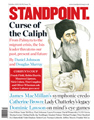



Herodium, not far from Bethlehem, was to bear Herod's name and serve as his burial place. His most prestigious architectural enterprise on the non-Jewish Mediterranean coast was the transformation, with no expense spared, of the derelict town of Strato's Tower into the magnificent new city of Caesarea in celebration of Caesar Augustus. It comprised a theatre and an amphitheatre for quinquennial games in the emperor's honour as well as a statue and a temple dedicated to him. Above all, Caesarea became a large port, equal in size to Piraeus, the harbour of Athens. Imported white marble was used for the construction of the palaces and the temples.
Herod considered himself a Jew and at home he behaved as one despite his frequent participation in Graeco-Roman worship outside Judea. He also observed Jewish dietary laws. Snidely alluding to his cruel treatment of Mariamme's offspring, Augustus remarked: "It is better to be Herod's pig than his son." A first-century CE Latin poet referred to the Jewish Sabbath as "Herod's day". He strictly adhered to Jewish rules governing mixed marriages and required circumcision of non-Jewish men before they were allowed to marry into his family. If they refused, the engagement was called off. Some of the pools discovered in Herodian palaces served for ritual purification, according to archaeologists.
His formal adherence to the Jewish religion did not stop him, however, from contributing to cultural modernisation. He promoted Greek-style entertainment thought to be attractive to progressive Jews, though hated by religious zealots. He built a theatre in Jerusalem, a hippodrome in Jericho and an amphitheatre in the coastal plain, where four-yearly games celebrated Augustus. Beyond the frontiers of his kingdom, at Paneas, near the sources of the River Jordan (the Caesarea Philippi of the Gospels), he dedicated another sanctuary to Augustus. Other temples were erected in Berytus (Beirut), Tyre and Rhodes. In Antioch, Herod provided marble to pave the main street and build colonnades. The councillors of Elis in Greece, the city of the ancient Olympics, greeted Herod as a generous benefactor and elected him life president of the Games, a role that he personally fulfilled during his visit in 12 BCE.
The jewel in the crown of his exclusively Jewish creative activity was the reconstruction of the Second Temple. It started in 19 BCE and was financed by him. The Western Wall of Herod's Temple still stands and is the holiest site in Judaism. The building was substantially larger and higher than the original Second Temple erected at the end of the sixth century BCE. To reassure the inhabitants of the city, Herod assembled in advance all the building materials, and hired and trained the stonemasons and carpenters.


- Liberty And Sovereignty
- Art And Public Culture In The 1830s And Today
- The Casanova Of LaSalle Street
- The Writer
- New Poetry
- Cartagena Poems
- A British Subject
- Travels with Betjeman
- Kizerman and Feigenbaum
- Communism’s Comeback?
- Irving Kristol on Jews and Judaism
- The State of Charity
- Teeth
- La Buena Muerte
- Judaeophobia
- Cool It
- Rachmones
- From 'Russia'
- 'Going Out' and Five Other Poems
- The Final Edition

1:06 PM
2:02 PM
2:01 PM
10:01 AM
10:01 AM
11:01 AM
12:01 PM
4:01 PM
10:01 AM
10:01 AM