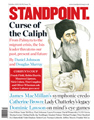



While the Shiites occupied the back seat of Middle Eastern history, they bided their time imagining what the world might look like with themselves at the reins. Their most hopeful, indeed messianic, scenario forecasts the world saved by the reappearance of the "Twelfth Imam", Muhammad al-Mahdi. It is he, in occlusion since the ninth century, who lends his name to Twelver Shiism, the largest Shiite sect, and whose return will usher in an era of peace and justice.
Equally significant are the flesh and blood figures, ideologues, activists and scholars whose legacy suggests that it is the Shia minority rather than the regional majority who are the political engine of the modern Middle East. For instance, it is one of the great ironies of modern Muslim intellectual history that the founding father of Salafism, a patently Sunni movement spanning the rise of the Islamist movement from Muslim Brotherhood founder Hassan al-Banna to Qaradawi, was himself a Shia. The nineteenth-century publicist and provocateur Jamal al-Din al-Asadabadi concealed his sectarian origins with the assumed name al-Afghani to suggest he was from Afghanistan rather than Persia.
Of course, the last century's most famous Islamic political activist was openly Shia: Ruhollah Khomeini was the architect of Iran's 1979 Islamic revolution, an epochal event as momentous as the Russian, French and American revolutions. Arguably its significance is just starting to become apparent since its energies were mostly checked during the decade-long Iran-Iraq war. The regime's greatest foreign success came via Iran's ancient ties to the Shia community of Lebanon, where the Revolutionary Guard seeded Hezbollah.
Today the most famous of all Arab Shia leaders is Hezbollah's Secretary General Hassan Nasrallah who has waged perpetual war with Israel, thereby earning him the admiration of even the Sunni masses and enabling the Party of God to jump the sectarian divide. At least that was the case until this May, when his cadre overran West Beirut, a Sunni stronghold, killing civilians, destroying property and thus outraging Sunnis across the Middle East. Here Hezbollah has entered dangerous territory.


- Migrant Crisis? Europe Hasn't Seen Anything Yet
- Why Palmyra Should Matter To The West
- Corbyn's Rise Makes Cameron Redundant
- No, Jeremy: Politics Is All About Borders Now
- Why 'Lady Chatterley' Still Provokes Us
- For Climate Alarmism, The Poor Pay The Price
- Will Putin's Empire Outlast The Soviets?
- British Witnesses To Lenin's Revolution
- Bibliophiles Beware: Online Prices Are A Lottery
- How Jeremy Corbyn's Coup Hijacked Labour
- Corbyn's Signpost Back To The Ghetto
- Unionists, Don't Despair: Scotland Is Not Lost — Yet
- Britain's Apologists For Child Abuse
- Lift The Fee Cap And Set Universities Free
- The Story Behind One Dead Man's Penny
- Hitler's 'Ecological Panic' Didn't Cause The Holocaust
- Meet The Montalvos: The First Global Family
- Mr Gove, Here Is Our Statute of Liberty
- A British Bill Of Rights
- Something For Nothing Just Won't Do Any More

12:01 AM
7:11 PM
7:10 AM