


Other ways of funding highquality art are possible, and the success of independent institutions like the Royal Academy and the Art Fund in the UK already demonstrates the point. Where state funding for art remains part of the mix, the national Arts Council should be disbanded. It needlessly duplicates DCMS roles, invites politicisation through the power of arts ministers to appoint its members, and muddies the independent decisions of the existing regional arts councils. Responsibility for funding the great national performing companies should become the direct remit of the DCMS, in the form of non-departmental public bodies, exactly as the major museums already are.
Any fears that the DCMS would be more overtly political in its handling of arts funding than the old arrangements should be allayed by the pre-existing example of museum funding, and by the knowledge that the department will be operating in the full glare of public scrutiny. But for further protection, the DCMS should take on a new, central responsibility for defending artistic freedom.
We live in a time where artistic freedom is under threat, from violent protest and from heavyhanded government interference, whether in the name of community relations or simply the dread words "Health and Safety". For too long, only the voice of public safety and control has been heard, especially within government, and not the voice in defence of the public square and the artist's liberty. With DCMS as the voice of freedom of expression, it could make the case within government and to the public for controversial work — and would be bound by this new duty from interfering in the arts itself.
Finally, great art is always made by passionate, daring individuals. To celebrate that, we need a privately-funded annual prize that grants money directly with no strings attached to one exceptionally talented British artist. Thinking afresh about how to fund the arts in Britain must place the emphasis on free, individual, creative talent, and not on funding committees or service to a national project. The Arts Council and government have lost track of this essential truth. It is time to recover it again.


- The US Can Still Help Save Syria — and Iraq
- Russian Resurgence has Blindsided Nato
- On Europe, Nothing Less than Treaty Change will do
- Putin has his Useful Idiots on the Left and the Right
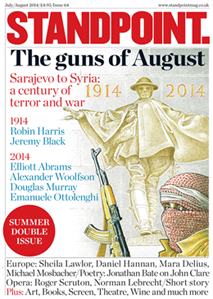
- Sarajevo: Where the Century of Terror Began
- Allen Lane’s Pelicans Take Wing Once More
- How Not to Remember the First World War
- Opera is Not Just Our Most Expensive Noise
- Jonathan Miller: One Man, Two Cultures
- Without a Big Idea, Cameron Will Lose
- A Christian Country? No, a Conservative One
- How to Get School Competition Right
- The War on the Firmest Bulwark of our Liberty
- How Modern Liberals Created Nigel Farage
- Caught in the Trap of His Own Metaphysics
- In Search of My Father, Agent of the Comintern
- Geoffrey Hill and the poetry of ideas
- Master of the Glories of the English Country Garden
- Independence Will Do Nothing for Scots
- Bullying and Bluff on the Road to Referendum

8:10 PM
8:08 PM