


The Sower (1888) is one of the best-known paintings in the exhibition. Painted after Millet, it is a work that ennobles the peasant's humble toil. The younger artist sought to identify himself with the ordinary working man, for whom, since he believed fervently in "art for the people", he himself laboured. "It has always been so much my desire to paint for those who don't know the artistic side of a painting," he wrote in a letter from 1889.
The Sower is also inspired by Japanese woodblock prints, for, like many contemporary Parisian artists, Van Gogh was deeply influenced by that country's art. Moreover, his decision to travel to Arles was not only for reasons of health, but because he believed that the light and the landscape of Provence might somehow resemble the light and landscape of Japan-a fictional, Western view of Japan that he'd often read about, since he had never actually been there. And for a depressive Dutchman, the idea of the light and warmth of southern France would have been exotic.
In another letter-sketch sent to Théo, written while Van Gogh was convalescing in the asylum at St Remy, we see a reference to one of his series of intensely alive, monumental cypresses, whose swirling forms suggest the strong mistral winds of southern France. "The cypress is beautiful as regards lines and proportions, like an Egyptian obelisk. And the green has such a distinguished quality."
The RA's exhibition is the first major survey of Van Gogh's work in the UK since 1968. It comes on the back of the Van Gogh Museum's recently published re-translations of the letters in a six-volume edition from Thames & Hudson: annotations and footnotes are extensive (though even more so in the online version), previous expurgations have been reinstated and when a letter refers to a painting, sketch or lithograph the relevant image is illustrated next to the letter.
Throughout the exhibition, it becomes clear that words are as important to Van Gogh as images. He was a naturally gifted writer, and the letters were a useful way of working out many of his artistic ideas. But the letters were also often his only means of successful communication with other people. Face to face, Van Gogh was hard work, and even his loyal brother despaired of long stretches in his exhausting company. When they lived together in Paris, Théo complained that after coming home from work, Vincent would talk incessantly about Impressionism, hardly drawing breath. He would even draw up a chair beside his brother's bed and attempt to carry on the monologue through the night.


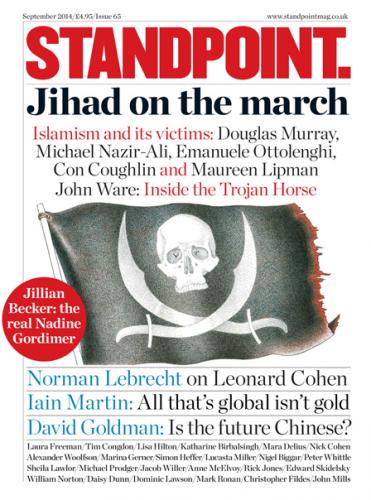
- The Plot to Islamise Birmingham’s Schools
- Nigeria, Iraq, Gaza—The Threat is the Same
- Radical Islam and its Invisible Victims
- The Man Who Tried to Teach us all a Lesson
- Globalisation and The Crisis of the Nation State
- The Medium Isn’t Always the Message
- What sort of Europe does Cameron Want?
- Is China outstripping the West at innovation?
- Piketty’s panacea will make inequality worse
- The Moral Strength of Leonard Cohen
- Designer who taught us to keep it simple
- The US Can Still Help Save Syria — and Iraq
- Russian Resurgence has Blindsided Nato
- On Europe, Nothing Less than Treaty Change will do
- Putin has his Useful Idiots on the Left and the Right
- Sarajevo: Where the Century of Terror Began
- Allen Lane’s Pelicans Take Wing Once More
- How Not to Remember the First World War
- Opera is Not Just Our Most Expensive Noise
- Jonathan Miller: One Man, Two Cultures

2:02 PM
5:02 PM
9:01 AM
2:01 AM
2:01 AM
4:01 AM
10:01 PM
9:01 PM
8:01 PM
6:01 PM