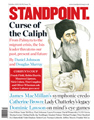



The time-honoured method by which antagonistic doctrines may be obliged to acknowledge one another is dialogue. Already in the Middle Ages we hear of disputations between representatives of the world religions at the courts of Mongol khans and other oriental potentates. But ecumenical encounters are evidently older than that. There are examples of them throughout the Hebrew Bible. The New Testament accounts of the interrogation of Jesus by Pontius Pilate show that pagans and Jews were accustomed to hold religious dialogues even in the most improbable circumstances.
It is worth dwelling on that particular dialogue, in the version handed down by St John's Gospel, because it anticipates so many of today's problems. Pilate asks Jesus: "Art thou a King then?" Jesus answers: "Thou sayest that I am a King. To this end was I born, and for this cause came I into the world, that I should bear witness unto the truth: every one that is of the truth heareth my voice." Pilate replies with a question: "What is truth?" But he does not wait for an answer.
Now, every religion makes strong claims to truth — not merely a truth but the truth. For this reason, no religion can be comfortable with epistemological relativism. In 2002, the then Chief Rabbi Jonathan (now Lord) Sacks published The Dignity of Difference, subtitled How to avoid the Clash of Civilisations, in which he sought to establish a framework for different faiths to live alongside one another and engage in dialogue, while acknowledging that their rival truth claims could not be reconciled. However, his fellow Orthodox rabbis were unhappy with some of the book's formulations, which in their view went too far and could be interpreted as relativising the truth claims of Judaism. Sacks agreed to rewrite an entire chapter to meet their concerns. For example, in the first edition we read: "[Judaism] believes in one God, but not in one religion, one culture, one truth. The God of Abraham is the God of all mankind, but the faith of Abraham is not the faith of all mankind." In the second edition, this has been changed to: "[Judaism] believes in one God but not in one exclusive path to salvation. The God of the Israelites is the God of all mankind, but the demands that are made of the Israelites are not made of all mankind."
Sacks claimed that, for Jews, there was nothing controversial in his main argument — that the Abrahamic monotheisms of Judaism, Christianity and Islam have a theological basis for mutual respect, based not on relativism but on the common concept of covenant. Evidently, though, the notion that Jews do not believe in one universal truth was highly controversial. The fact that Judaism does not claim exclusivity in seeking salvation does not mean that its truth claims are not absolute.
It has become impolite, even taboo, to point out the incompatibility of such religious truth claims. In a recent column, the Catholic writer Piers Paul Read criticised an American Jewish friend who had rewritten in Hebrew the Latin texts of the B Minor Mass to produce "the Jewish Bach". The fact that this project made him feel "profoundly uneasy" implied, wrote Read, that he was not truly ecumenical. While acknowledging the decrees of the Second Vatican Council, enjoining Catholics to treat "our older brothers in the faith" with respect, Read is dismayed by the Jewish rejection of Jesus. He suspects that "were I not a Catholic, I would not believe in God". Quoting Blaise Pascal, Read accepts that "true Christians and true Jews have only one religion", but that does not resolve the stark choice: either Jesus Christ is the Messiah, or he is not. For him "the question to be answered is whether what [religions] teach is true and, like Pascal, the only God I can believe in is the God foretold by the Jewish prophets and revealed by Christ."
It is worth dwelling on that particular dialogue, in the version handed down by St John's Gospel, because it anticipates so many of today's problems. Pilate asks Jesus: "Art thou a King then?" Jesus answers: "Thou sayest that I am a King. To this end was I born, and for this cause came I into the world, that I should bear witness unto the truth: every one that is of the truth heareth my voice." Pilate replies with a question: "What is truth?" But he does not wait for an answer.
Now, every religion makes strong claims to truth — not merely a truth but the truth. For this reason, no religion can be comfortable with epistemological relativism. In 2002, the then Chief Rabbi Jonathan (now Lord) Sacks published The Dignity of Difference, subtitled How to avoid the Clash of Civilisations, in which he sought to establish a framework for different faiths to live alongside one another and engage in dialogue, while acknowledging that their rival truth claims could not be reconciled. However, his fellow Orthodox rabbis were unhappy with some of the book's formulations, which in their view went too far and could be interpreted as relativising the truth claims of Judaism. Sacks agreed to rewrite an entire chapter to meet their concerns. For example, in the first edition we read: "[Judaism] believes in one God, but not in one religion, one culture, one truth. The God of Abraham is the God of all mankind, but the faith of Abraham is not the faith of all mankind." In the second edition, this has been changed to: "[Judaism] believes in one God but not in one exclusive path to salvation. The God of the Israelites is the God of all mankind, but the demands that are made of the Israelites are not made of all mankind."
Sacks claimed that, for Jews, there was nothing controversial in his main argument — that the Abrahamic monotheisms of Judaism, Christianity and Islam have a theological basis for mutual respect, based not on relativism but on the common concept of covenant. Evidently, though, the notion that Jews do not believe in one universal truth was highly controversial. The fact that Judaism does not claim exclusivity in seeking salvation does not mean that its truth claims are not absolute.
It has become impolite, even taboo, to point out the incompatibility of such religious truth claims. In a recent column, the Catholic writer Piers Paul Read criticised an American Jewish friend who had rewritten in Hebrew the Latin texts of the B Minor Mass to produce "the Jewish Bach". The fact that this project made him feel "profoundly uneasy" implied, wrote Read, that he was not truly ecumenical. While acknowledging the decrees of the Second Vatican Council, enjoining Catholics to treat "our older brothers in the faith" with respect, Read is dismayed by the Jewish rejection of Jesus. He suspects that "were I not a Catholic, I would not believe in God". Quoting Blaise Pascal, Read accepts that "true Christians and true Jews have only one religion", but that does not resolve the stark choice: either Jesus Christ is the Messiah, or he is not. For him "the question to be answered is whether what [religions] teach is true and, like Pascal, the only God I can believe in is the God foretold by the Jewish prophets and revealed by Christ."
Like this article? Share, save or print using the icons below:


More Features
- Migrant Crisis? Europe Hasn't Seen Anything Yet
- Why Palmyra Should Matter To The West
- Corbyn's Rise Makes Cameron Redundant
- No, Jeremy: Politics Is All About Borders Now
- Why 'Lady Chatterley' Still Provokes Us
- For Climate Alarmism, The Poor Pay The Price
- Will Putin's Empire Outlast The Soviets?
- British Witnesses To Lenin's Revolution
- Bibliophiles Beware: Online Prices Are A Lottery
- How Jeremy Corbyn's Coup Hijacked Labour
- Corbyn's Signpost Back To The Ghetto
- Unionists, Don't Despair: Scotland Is Not Lost — Yet
- Britain's Apologists For Child Abuse
- Lift The Fee Cap And Set Universities Free
- The Story Behind One Dead Man's Penny
- Hitler's 'Ecological Panic' Didn't Cause The Holocaust
- Meet The Montalvos: The First Global Family
- Mr Gove, Here Is Our Statute of Liberty
- A British Bill Of Rights
- Something For Nothing Just Won't Do Any More
Popular Standpoint topics

11:12 AM