


As Solicitor-General in the former Labour government, Vera Baird QC was largely instrumental in drafting legislation to criminalise men paying for sex with a woman who is trafficked or otherwise coerced into prostitution. Baird, however, is another feminist who is against criminalising forced marriage. "The research indicated that the victims would not come forward if they feared their parents would go to prison," she says. "If there was evidence the other way then we would have criminalised. All we can do is go through the community and do what the research says."
But why should we "go through the community" on the subject of forced marriage when we do not do so with other offences? Why should there be one rule for Muslim women and another for white Western women? This cultural relativism is the result of the creeping acceptance of aspects of Sharia law.
Some victims feel distressed at losing contact with their family and are willing to forgive the cruel treatment they receive. When Fawzia was told by her father that he had found a husband for her in Pakistan she was horrified. She says: "I was 20 and had a boyfriend I loved. He was Muslim but not really devout. I told my father I would not give him up, so I was beaten and told I would be sent away and would never see them again. I moved out and my mother is trying to reconcile us. If I had reported him there is no way he would ever speak to me again."
Marai Larasi, director of Imkaan, a national charity for black and Asian victims of domestic violence, says criminalisation of forced marriage is not a priority for her organisation. "Would it prevent instances? Yes, perhaps, but how many? The priority has to be the victims and we do not have enough funding for services right now," she says.
In the case of a family with several daughters, do we not owe it to the younger children to stop the family from enforcing marriage in the first instance? "There are parents who genuinely believe that they are doing the best for their children," says Larasi. "They are operating under patriarchy, just as those who blame women for being raped are, but under a different framework. But it is more than the framework that is different. Women living under Muslim law, whether formally sanctioned as in Islamic states, or merely accepted or used covertly, as is increasingly the case in the UK and France, can suffer extreme forms of human rights violations.


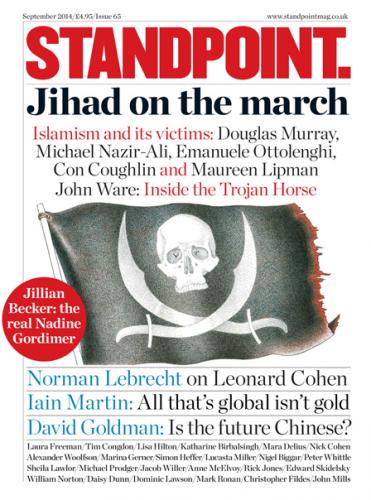
- The Plot to Islamise Birmingham’s Schools
- Nigeria, Iraq, Gaza—The Threat is the Same
- Radical Islam and its Invisible Victims
- The Man Who Tried to Teach us all a Lesson
- Globalisation and The Crisis of the Nation State
- The Medium Isn’t Always the Message
- What sort of Europe does Cameron Want?
- Is China outstripping the West at innovation?
- Piketty’s panacea will make inequality worse
- The Moral Strength of Leonard Cohen
- Designer who taught us to keep it simple
- The US Can Still Help Save Syria — and Iraq
- Russian Resurgence has Blindsided Nato
- On Europe, Nothing Less than Treaty Change will do
- Putin has his Useful Idiots on the Left and the Right
- Sarajevo: Where the Century of Terror Began
- Allen Lane’s Pelicans Take Wing Once More
- How Not to Remember the First World War
- Opera is Not Just Our Most Expensive Noise
- Jonathan Miller: One Man, Two Cultures

11:05 PM
4:04 PM
6:01 PM
2:01 AM
2:01 PM
9:01 PM
10:01 PM
11:12 AM
4:12 PM
3:12 PM