


In its report of May 2011 the Home Affairs Select Committee argued in favour of forced marriage being recognised as a specific criminal offence. Two months later the Home Office told the committee that a new offence would prove difficult to enforce and that it could be dealt with under existing offences such as kidnapping, people trafficking and abduction. However because of the differing opinions among experts, the Home Office commissioned Dr Aisha Gill of Roehampton University, an uncompromising feminist and expert on forced marriage, to produce an independent feasibility study on criminalisation.
I naively assumed that those whom Gill consulted would support the idea of criminalisation. But the result was depressingly similar to other issues relating to the treatment of Muslim women and girls: many respondents argued that bringing a criminal case would make reconciliation between the victims and their families less likely.
I asked Gill what her own view was on criminalisation. "It would make sense if nothing else was working," she says, "but we have had about 300 civil protection orders issued since they were introduced, and we would never have seen 300 prosecutions." Should it really be down to the victims of crime to decide whether the perpetrators are criminalised? "Lots of girls and young women say that they do not want to get their parents into trouble," answers Gill. "Prosecutions do not allow for any reconciliation afterwards."
Heather Harvey is a feminist who campaigns against human rights abuses of women and children, and has carried out research into forced marriage for the Foreign Office's community liaison unit. She, too, believes that criminalisation is not the solution. "There are dangers in creating and focusing on specialist bits of legislation that disproportionately apply or seem to apply to particular parts of the community, particularly those already under siege," she says. "They do it because they know they can emotionally manipulate their children or because they justify it in their heads as not forced but arranged. Having a criminal offence wouldn't alter this. And it gives false hope to young women to think that by calling it a crime it would suddenly deter their parents and keep them safe."


- The Plot to Islamise Birmingham’s Schools
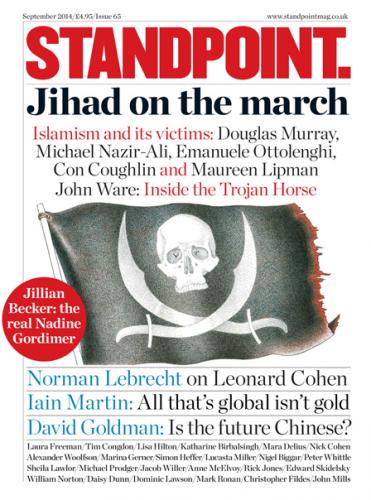
- Nigeria, Iraq, Gaza—The Threat is the Same
- Radical Islam and its Invisible Victims
- The Man Who Tried to Teach us all a Lesson
- Globalisation and The Crisis of the Nation State
- The Medium Isn’t Always the Message
- What sort of Europe does Cameron Want?
- Is China outstripping the West at innovation?
- Piketty’s panacea will make inequality worse
- The Moral Strength of Leonard Cohen
- Designer who taught us to keep it simple
- The US Can Still Help Save Syria — and Iraq
- Russian Resurgence has Blindsided Nato
- On Europe, Nothing Less than Treaty Change will do
- Putin has his Useful Idiots on the Left and the Right
- Sarajevo: Where the Century of Terror Began
- Allen Lane’s Pelicans Take Wing Once More
- How Not to Remember the First World War
- Opera is Not Just Our Most Expensive Noise
- Jonathan Miller: One Man, Two Cultures

11:05 PM
4:04 PM
6:01 PM
2:01 AM
2:01 PM
9:01 PM
10:01 PM
11:12 AM
4:12 PM
3:12 PM