


Not all victims take Meena's view. Many, like Razia, do not wish to see their parents in court. When she was 16, Razia was told by her mother that she was promised to the son of a family friend. "I had no idea what marriage really was, except for the fairytale notion of a wedding dress and being swept off my feet. But on my wedding night, when I was 17 years old, I was raped — I know that now — because he thought it his right to have sex with me. I ran away after six months and got help. My parents still won't speak to me, two years later."
Why is Razia protective of her parents after the distress she has been through? "They felt they were doing their best for me. If they thought I would be so unhappy, I don't think they would have made me marry him."
In the UK, forced marriage affects mainly women and girls from South Asia as well as smaller numbers from Sudan, Turkey, Afghanistan, Eritrea, Armenia, Somalia and the Irish traveller community. FCO dealt with over 1,735 cases in 2010, whereas estimates from feminist organisations dealing with the issue range from 450 to 1,000 victims a year. The difficulty of collecting data is compounded by the fact that the line between an arranged marriage and a forced one is not always clear.
The debate about criminalisation began in November 2001, only weeks after 9/11. Patricia Hewitt, then Minister for Women, announced a "project" to "eliminate" forced marriages in Britain's Asian communities. Hewitt argued that the fear of being accused of racism had stopped politicians from confronting cultural beliefs that were "unacceptable in Western societies". She said it was time to "go beyond multiculturalism" and call for a reinforcement of essential British values. But there was resistance from some within the Muslim community who did not accept that forced marriage should be dealt with by the criminal justice system.
Habib Rahman, chief executive of the Joint Council for the Welfare of Immigrants, claimed that merely airing the issue risked inflaming tensions. "It is playing supremacy, saying, ‘We are better than you, we have got certain standards which are better than yours'." He added: "This . . . nationalistic sort of debate . . . goes against the fabric of multiculturalism."


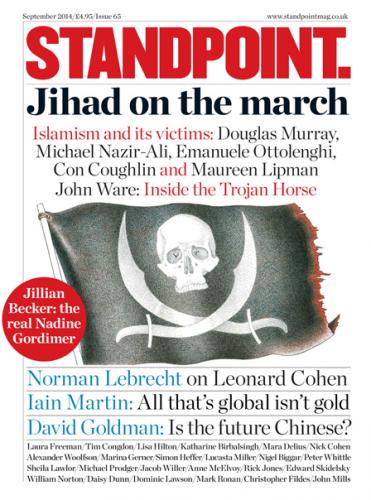
- The Plot to Islamise Birmingham’s Schools
- Nigeria, Iraq, Gaza—The Threat is the Same
- Radical Islam and its Invisible Victims
- The Man Who Tried to Teach us all a Lesson
- Globalisation and The Crisis of the Nation State
- The Medium Isn’t Always the Message
- What sort of Europe does Cameron Want?
- Is China outstripping the West at innovation?
- Piketty’s panacea will make inequality worse
- The Moral Strength of Leonard Cohen
- Designer who taught us to keep it simple
- The US Can Still Help Save Syria — and Iraq
- Russian Resurgence has Blindsided Nato
- On Europe, Nothing Less than Treaty Change will do
- Putin has his Useful Idiots on the Left and the Right
- Sarajevo: Where the Century of Terror Began
- Allen Lane’s Pelicans Take Wing Once More
- How Not to Remember the First World War
- Opera is Not Just Our Most Expensive Noise
- Jonathan Miller: One Man, Two Cultures

11:05 PM
4:04 PM
6:01 PM
2:01 AM
2:01 PM
9:01 PM
10:01 PM
11:12 AM
4:12 PM
3:12 PM