


These keepers of Mahler's flame crop up throughout Lebrecht's book. They help him to penetrate deeper than previous biographers, and to answer the questions we really want answered. What was Mahler like? How did he come to make such an unforgettable impression on his contemporaries? Why, after his works were eclipsed during the Nazi era, have they come to exercise an influence on our culture that is at once broad, deep and ubiquitous? Mahler matters not only to his devotees, but to countless others too. It is his music to which we turn when tragedy strikes and public mourning is required, from the assassination of Kennedy to 9/11. It is Mahler who has inspired the best of film music, from Hollywood classics of the 1930s to the Harry Potter movies today. Above all, it is Mahler — as "homeless" in anti-Semitic Austria as he was in philistine America — who helps us to understand the inhospitable, incomprehensible world we inhabit today.
Mahler's life and death in many ways anticipated our culture. For the press, he was always good copy: sex and celebrity, art and money, he was always the maestro of his own fate. It is a myth that Mahler was neglected in his own lifetime: by the time he died in 1911, aged 50, he was probably the best-known musician in the world. His last European concert, at Munich in September 1910, was an incomparable "cultural convocation", gathering together the luminaries of Germany, Austria and France to hear the première of his Eighth, the Symphony of a Thousand. This work, conceived on an unprecedented scale and, like all Mahler's mature works, exploring undiscovered regions of tonality and sonority, is received with rapture; taking tea with the hero, Thomas Mann decides that he has for the first time encountered a "great man" and promptly endows Gustav von Aschenbach, the protagonist of his autobiographical novella Death in Venice, with Mahler's forename and features. In the film, Visconti went much further: Aschenbach becomes a composer rather than a writer, and the Adagietto, which in reality was Mahler's "love letter" to Alma, is transformed by Visconti into the accompaniment to the cholera-stricken Aschenbach's death throes, as his fatal attraction for the youth Tadzio culminates in a Wagnerian Liebestod. By cutting Mann out of his story and making it all about Mahler, Visconti reinforced the latter's transcendent status as a cultural symbol. No other 20th-century classical composer can compete with rock stars, some of whom (such as Pink Floyd) have absorbed his influence.
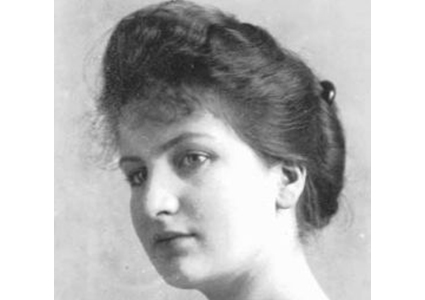
Shortly before his Munich triumph, Mahler had asked Freud for a consultation. What strikes me first about this one and only meeting of two of modernity's greatest minds is the fact that Freud interrupted his Dutch seaside vacation to rendezvous in Leiden, while Mahler took a 30-hour train journey from Austria to be there. It must have mattered a lot to both men. Why did Mahler, who had never taken much interest in psychoanalysis before, suddenly need to see Freud so urgently? He was desperate: Alma's latest adultery with the architect Walter Gropius, coming on top of professional frustrations and the heart disease to which he would soon succumb, had driven him to the verge of a mental and physical breakdown. One of the movements of his last, unfinished symphony is headed Purgatorio, and Mahler's predicament during that last summer was indubitably that of a soul in purgatory. There is no other word for the ménage à trois in which he was living, with his wife and anti-Semitic mother-in-law half-expecting, half-willing Mahler to drop dead at any moment, Gropius waiting in the wings and little Anna still traumatised by guilt — the hysterical, self-absorbed Alma having allowed her surviving daughter to blame herself for the scarlet fever that had killed her elder sister three years before.
No wonder Mahler needed to talk. And who better to listen than Freud, the inventor of the talking cure? Four hours they spent together, sitting in the Gilded Turk (the nearest thing to a Viennese café they could find) and walking the deserted, dusty streets of Leiden. We can picture Freud striding along, a head taller than the diminutive Mahler, whose stamping gait was so peculiar that his little niece Eleanor mimicked it at his wedding and was sent home in disgrace. Yet both loved long country walks and Freud presumably gave Mahler permission to ignore his doctor's (dubious) advice to avoid strenuous exercise. Lebrecht takes pains to reconstruct their conversation from various first- and second-hand accounts, some contemporaneous, others decades later. He offers no certainty, but enables us to do more than merely speculate.


Post your comment
- Race To The White House Through The Looking-Glass
- Brexit Gives Us A Historic Opportunity
- American Conservatives Must Stand Up To Trump
- Cicero's Analysis Of Decline Offers Lessons For The West
- Deepdene: Rise and Fall of the House of Hope
- Debunking the EU Referendum Myths
- Britain's Opportunity Is Europe's Warning
- Controlling Immigration Is Good For Democracy
- The Pied Piper of Islington
- The West Cannot Afford To Ditch Nato
- End Of History — Or Clash Of Civilisations?
- We Can Defeat Islamist Terror — But Not On Our Own
- Without the Emperor, What is Left of Old Japan?
- Now Or Never
- Who Will Heal This Divided Country?
- What Made The West Great Is What Will Save Us
- Shock And Awe: Tales Of A Washington Insider
- We Shouldn't Let Old Men Rot Away In Jail
- Arnold Wesker’s Bid To Build A New Jerusalem
- Our EU Deal Gives Us The Best Of Both Worlds
