



So what did they talk about? Sex (of course), but what precisely was Mahler's problem? Lebrecht thinks that Mahler had tacitly permitted his wife to sleep with Gropius as the price of saving his marriage. Immediately after the session with Freud, Mahler wired Alma, evidently upbeat: "Feeling cheerful, interesting discussion." Later, more euphoric: "I am living everything as if new." En route home, Mahler wrote her a poem, in which he declared: "Night shadows are dispelled by a mighty word." So Freud's analysis had done the trick, at least initially. But that is the last we hear from Mahler himself: apart from his wife, he seems not to have confided in others and the only other witness was Freud. Needless to say, Alma got her version into the public domain first. In 1989, her memoirs present Freud as taking her side and scolding Mahler: "How dare a man in your state ask a young woman to be tied to him?" What state does he (according to Alma, the ultimate unreliable narrator) mean?
Freud gave two conflicting answers to third parties. He told Theodor Reik, a disciple who applied psychoanalysis to creativity, that in their consultation he had failed to penetrate the "symptomatic façade" of Mahler's "obsessional neurosis". "The visit appeared necessary because his wife at the time rebelled against the fact that he withdrew his libido from her." Lebrecht interprets this to mean that Mahler had stopped having sex with Alma for fear that the exertion would be too much for his weak heart. If Reik's version of the Freud-Mahler encounter is correct, Alma justified her adultery on the grounds of her husband's endocarditis.
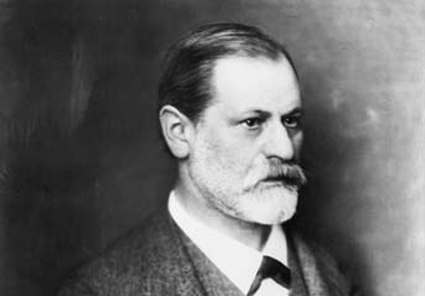
Another version, however, emerged later. Princess Marie Bonaparte of Greece and Denmark was one of the more glamorous occupants of Freud's couch. He gave her a detailed and (as Lebrecht puts it) "lubricious" account of his consultation with Mahler, in which the need to impress her evidently took precedence over patient confidentiality. Fortunately, the princess took notes. According to these, Freud relates that Mahler's problem with Alma was impotence. Mahler apparently had "an enormous mother-fixation" but also an insight into why "my music has sudden changes from the most noble to an ordinary banal melody": it all has to do with an incident in his childhood. While Mahler's parents were quarrelling, the distressed Gustav heard an organ-grinder playing the old plague-song "Ach, du lieber Augustin", ending in the phrase "alles ist hin" ("everything is doomed"). Freud concludes that their "analytic talk" actually cured the patient: "Mahler recovered his potency and the marriage was a happy one until his death..."
Lebrecht doesn't buy this "happily ever after" ending, and neither do I. While Mahler is responding to Freud's "mighty word" with gushing love poetry, Alma is writing to her lover, Gropius: "There is not one spot on your body that I would not like to caress with my tongue." She proceeds to cuckold her husband at the very moment of his last triumph in Munich, inviting scandal by brazenly sneaking off for assignations with Gropius in full view of everybody. Long after her death, her daughter Anna asks Lebrecht: "How could she do that to Mahler"
Perhaps Tom Lehrer's ribald song Alma got it right about the Mahlers: "Their marriage, however, was murder./He'd scream to the heavens above,/‘I'm writing Das Lied von der Erde,/And she only wants to make love!'"
Yet Mahler could never let Alma go — even posthumously. Although she had two more husbands, including Gropius, she spent half a century of merry widowhood living for (and from) Mahler's musical legacy. Alma was a monster. Whenever there was a crisis, the lady vanished. She even missed Mahler's funeral "on doctor's orders". Alma lived to 85.
"Not every civilised person is susceptible to Mahler," writes Lebrecht. And, one might add, not all of those who have been susceptible to Mahler are civilised.


Post your comment
- Race To The White House Through The Looking-Glass
- Brexit Gives Us A Historic Opportunity
- American Conservatives Must Stand Up To Trump
- Cicero's Analysis Of Decline Offers Lessons For The West
- Deepdene: Rise and Fall of the House of Hope
- Debunking the EU Referendum Myths
- Britain's Opportunity Is Europe's Warning
- Controlling Immigration Is Good For Democracy
- The Pied Piper of Islington
- The West Cannot Afford To Ditch Nato
- End Of History — Or Clash Of Civilisations?
- We Can Defeat Islamist Terror — But Not On Our Own
- Without the Emperor, What is Left of Old Japan?
- Now Or Never
- Who Will Heal This Divided Country?
- What Made The West Great Is What Will Save Us
- Shock And Awe: Tales Of A Washington Insider
- We Shouldn't Let Old Men Rot Away In Jail
- Arnold Wesker’s Bid To Build A New Jerusalem
- Our EU Deal Gives Us The Best Of Both Worlds
