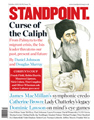

You are here:   Features > What Happens When The Band Stops Playing?
 
Not in America, however. Deborah Borda, who signed Dudamel at 26 as music director at the Los Angeles Philharmonic, told me last summer that she expected two of the Big Five to go under. Too stuck in their ways, was her view. Her Dude has Hispanic street cred and the music he plays often swings. Hollywood is sitting up and taking interest.

Other US orchestras are wrestling with long legacies of stasis. In the 1970s American orchestras lost the thirty-somethings to rampant rock, an art that refused to grow old. Audiences who would once have gravitated in midlife from the Stones to the symphony stuck with the Jagger tours. The symphony lost its Middle America hinterland.

Heavily dependent on local donors, themselves of advancing age, orchestras carried on playing Brahms, Schumann and Dvorak, music of a distant past, accentuating their geriatric profile. Musicians, fearful for their jobs, adopted a hard-hat unionism that won them $100,000 starting pay for a 20-hour week in the Big Five, unaffordable when the market crashed. Attitudes have since hardened into confrontation. Only in American orchestras do I hear well-meaning executives referred to as "management", the natural enemy.

Remedies are rare and largely unproven. Gary Hanson of Cleveland, feeling the recession in a depressed, rustbelt city, switched his orchestra part-time to Miami. Zarin Mehta of New York installed a music director Alan Gilbert who, while light on prior achievement, is putting Messiaen into Manhattan ears and bringing a Finn, Magnus Lindberg, as composer in residence. Chicago SO president Deborah Rutter lured the glamorous Riccardo Muti back into American contention. Boston's Mark Volpe is reeling from the sudden loss of James Levine while Philadelphia has hired the bright French-Canadian Yannick Nézét-Séguin as its next music director, should it succeed in emerging from the bankruptcy courts.

Seeds of orchestral revival are found only in the Far East, where the Japanese audience has not wavered amid economic and natural disasters, China is creating six new orchestras a year and the Seoul Philharmonic in South Korea has become the first non-European, non-US orchestra to win a major label record contract, with Deutsche Grammophon. Classical sales in Korea are the highest in the world, amounting to 18 per cent of the total record market, against less than 2 per cent in the US. These are encouraging signs, apparently a significant shift in the centre of orchestral activity. But at close hand, it becomes clear that the impetus in Asia is often attributable to local causes — inter-city rivalry in China's command economy, self-education drives in Korea. The question of who needs the symphony orchestra in the 21st century is not going to be resolved by isolated national phenomena.

View Full Article
 
Share/Save


Steve Meikle
July 1st, 2011
10:07 PM
The thing about sacred cows is that they are idols to be butchered. So Mr Lebrecht says exactly the wrong thing when he talks about how the dutch use to view art as a sacred cow. Such is asking to be butchered Does he want a starving populace to still find solace in symphony concerts? I find it interesting that the most prosperous and free land in 19th century Europe was England, the country Brahms called the land without music. Feed and liberate the people, and THEN give them music if there is any resoucr left. Oh, and BTW I was a professional musician also (a double bass player)

Anonymous
July 1st, 2011
7:07 PM
In the US, there is a huge disconnect between culture and entertainment. Many of the locales, Philadelphia & Detroit, to name just 2, are finding themselves in dire straits when it comes to funding for orchestras. On the other hand, these communities support multiple major league sports enterprises with budgets that dwarf those of all cultural institutions in the same region.

Louis Bialy
July 1st, 2011
4:07 PM
Lebrecht brilliantly analysed this problem in 1996 with the publication of his well-received book, "When The Music Stops." In that book he squarely lays the blame on the "multinationals" and the obscenely expensive music "stars". Oddly, his current analysis doesn't give a mention to these formerly nefarious players in the big business of musical performance and its seemingly voodoo economics.

Norma Procter
July 1st, 2011
1:07 PM
This article of Norman's is a warning, a warning to societies bound by the immediate, the X factor, the third rate. Somehow, orchestra's must be funded. Society needs it; people do flock to it. Think of the popularity of the Proms, Last Night ( a bit dumbed down) in particular. I was an orchestral wife during most of time our children were small. We survived the musician amidst us having three jobs - orchestral broadcasting musician, teacher in a music academy and school and private teaching - a regime of work from 8 in the morning to after the evening concert. And that is before the practice. Musicians are driven, driven to interpret for those of us who cannot read the dots. Marty Spence ( above) speaks of a banality of listening to an orchestra. Maybe he can judge. As a listener, a non-literate in terms of reading the score, I depend on the orchestral experience - those hieroglyphics on the page have to be translated for me. I have never found the experience banal, rather, overwhelming. That a band of disparate people with supreme skills can, with different world views, come together at the moment of the concert never ceases to amaze me. Society could learn something from this alone. The young people of Israel and Palestine come together to make music. There is something beyond comprehension to the power of music. Norman writes of the problems for the audiences as music develops. This is, of course true. Listen to the music of Oscar Edelstein, for example. Yet he is developing a popular audience in his own country, Argentina. This is a demonstration to me that a new orchestral music can develop to live alongside the great works of the long dead. Music needs orchestras, people need music. The funding must be found to continue the levels of skills needed.

Anonymous
July 1st, 2011
10:07 AM
I am finding it increasingly fascinating how so many people seem to ignore the gathering clouds on the horizon. This current economic situation is very, very serious. It's not a matter of redistribution of wealth or raising taxes or cutting budgets or who gets spared. No one gets spared; it's just a matter of time. Orchestras may be the canary in the coalmine but there is really very little we can do about it. In broader terms, once the US hits the brick wall (oh, and they will, mark my words), so will China and then we will no longer be wringing our hands over symphony orchestra subsidies, but whether we can feed and clothe our children. It's like the Trotsky quote: 'you may not be interested in war, but war is interested in you. In this case, you may not be interested in harsh economic realities, but they will come to bite everyone in the ass sooner or later. And you know what? I’m a professional musician!

martyspence
July 1st, 2011
1:07 AM
Watching a symphony is the equivalent of viewing a 'paint-by-numbers' painting. Yes, someone creative in the past did something amazing, but the militaristic perfection of all the players playing in time together is banal and uninteresting.

ECON
June 30th, 2011
11:06 PM
As long as there are musicians who play the classical repertoire, there will be an audience.

mj
June 30th, 2011
11:06 PM
And with Dudamel, it doesn't hurt a bit that he is a fabulous conductor!

Jon Jermey
June 30th, 2011
10:06 PM
Congratulations on successfully ignoring the elephant in the room! Of course it's the ready availability of cheap (and often free) recorded classical music from the best composers, conductors and performers which means that I can now sit at home in peace and comfort with a glass of beer and listen to Beethoven, rather than making a long trip to the city, wrestling with parking or public transport, paying enough for an entrance ticket to purchase a dozen CDs, and sitting through pieces by modern composers before I hear what I came for. It's called 'progress'. Get over it.

greg
June 30th, 2011
7:06 PM
It's all about balance. Orchestras need to reach new audiences by creative programming, using social media, embracing cross-overs with the multitudes of popular emerging styles, integrating with music education for all ages, engaging their own players in a shared vision of the future and combining fiscal prowess with great leadership. Public funding will follow, even if limited, if we have a wide variety of butts in seats enjoying the music.

Post your comment

CAPTCHA
This question is for testing whether you are a human visitor and to prevent automated spam submissions.