


RT: Even with the Human Rights Act, which is currently being reconsidered....
RS: Yes. But we can't do it with EU directives, which account for more than 50 per cent of the laws that are imposed upon us.
RT: That is a bit of a dodgy figure because an awful lot of that 50 per cent consists of minor, rather than major, laws.
RS: A law is major to anybody who's afflicted by it.
DJ: I want to throw in the moral aspect because I'm still struck by the terms "scrupulous" and "unscrupulous" when talking about optimists and pessimists. Is there a place for either in your schemes of things? Optimists, if we take the extreme example of Dr Pangloss, tend effectively to deny evil, which plays no part in the more extreme examples of Enlightenment optimism. Evil is merely backwardness — people who haven't yet seen the light. On the other hand, in pessimistic schemes of thought, ideas like original sin, a deep sense of the world being a fallen place, play a very big part.
RS: The idea of original sin captures something important — that our condition is one that is deeply flawed in ways that the moral sense tries to rectify. We are constantly trying to gratify our selfish wishes at the cost of other people. We are brought up to overcome this but we don't ever completely overcome it.
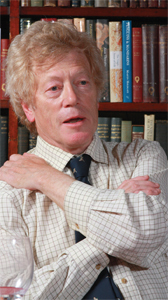
It is true that evil is a reality in our experience but we go through long periods of denial about it because it is an uncomfortable thing to recognise. Therefore, there is a motive to describe evil in another way, as something that we've got over by being nice. This is the Matt Ridley view of the human condition — that we can settle everything by respecting each other and signing contracts. This is true up to a point but, as we know, the resulting condition is fragile. Without an awareness of this, we live in danger.
RT: I share Roger's view of society as fragile. What an extraordinary achievement it is to be able to live with each other on so many levels, in so many ways, and in so many different groupings. I also think Roger's analysis of the Born Free fallacy is superb. I don't think we're born free or born good. I wonder, however, whether there his view of humanity is a little too essentialist for my taste. My own feeling is that the human species is infinitely malleable and may even become gradually better — though one cannot ignore the catastrophic relapses we witnessed in the 20th century.
DJ: Not an unreasonable view — in many ways we have become better in the sense that we do demonstrate compassion, not just for our immediate family and friends but for people we don't even know.


Post your comment
- Why Israel's DNA Is So Revolutionary
- Reagan, Trump and America
- The Socialism of Fools
- The Anti-Elitist Elite Versus the Underclass
- Putting A Value On Human And Animal Life
- American Jews and the Defence of Western Civilisation
- Is China Really a Threat to us?
- Will Germany be a Divided Nation Again?
- Europe, America and the Coalition
- Incurable Romantics
- Can the Atlantic Coalition Hold?
- Has Britain Found a Role Yet?
- Life, Death and the Meaning of Cancer?
- Is the Party Really Over for Labour?
- Should Baby Boomers Feel the Pinch?
- Will the Tories Give us the Schools We Deserve?
- What Would Keynes Say?
- How European are the British?
- Speaking Truth Unto the BBC
- Booking a Place in History

- Time To Revisit The Two Cultures
- Why The Most Civilised Of Men Felt Like A Fraud
- Trump's Appeal Is More Roosevelt Than Reagan
- Anything Dennett Can Do, Scruton Does Meta
- Who Will Do Justice To Our Judiciary?
- Why France Is Revolting Against The Ancien Regime
- Underrated: Benedict XVI
- The Battle Against The Philistines Never Ceases