


Although the US-style party leader debates caused a stir about the Americanisation of British elections, their outcomes have actually become less about governance by Parliament and more about London's relations with Brussels. Parliament's function today is not so much to write British laws as it is to rubber-stamp EU legislation already negotiated by Eurocrats. In short, British elections are really to select the UK's chief representative to the EU. Americans have largely ignored or misapprehended the implications of "ever closer union" for the EU. Too many bought the famous Kissingerian line about finding one voice at the end of the telephone line from Washington. The EU is remarkably close to that point, but it is not the strong Europe its advocates had predicted. Instead, almost the exact opposite is true: the EU is typically less than the sum of its parts. After incredible, interminable internal gyrations, the EU too often produces a consensus reflecting the weaknesses of its most timid members rather than the strengths of the boldest. If the latter were free to act in partnership with the US, the West would be far better off. We might not benefit from the full weight of a united Europe, but at least we wouldn't find a united Europe in opposition, or so entangled in its own procedures that we were constantly burdened by Europe as a sea anchor.
Do the British wish to sink further into the swamp of Europeanisation, losing their statehood gradually, or perhaps more rapidly in the European project, or do they wish to remain sovereign? Although little remarked in the US, Obama is as much in favour of deeper EU integration as the most federalist EU advocates, a view in the long term deeply adverse to America's interests. Here is precisely the point where a Conservative government in Britain could hold the fort until adult government is returned to Washington.
But will Cameron do so? From Washington, the answer is far from clear. Cameron's campaign tried to walk the fine line of being Eurosceptic within the Conservative Party while not making it much of an issue in the broader campaign, almost as if he were ashamed of the position, or ashamed of its Tory adherents. As a corollary, Cameron was hardly eager to appear enthusiastic about a close relationship with Washington. To be sure, many Britons argue that Cameron is a true Eurosceptic, but campaigns on the issue in a passionless way to avoid riling pro-EU voters who might vote Conservative. Even if true, this answer hardly inspires confidence. And everyone, endlessly, stresses how "pragmatic" Cameron is. One can only guess what that means.
While Clegg's Europhilia is appalling, one wonders if Cameron is temperamentally inclined to do anything other than go with the flow. Their written agreement not to transfer new "sovereignty or powers" to Brussels in this Parliament makes the agreement simply to review past transfers or other mistakes, of which there have been far too many, implicitly a commitment to do little to reverse them. This uneasy compromise is almost certainly unsustainable over time. And with Clegg constantly whispering in Cameron's ear, who knows what will happen next that mere words on paper cannot prevent?
Greece's financial crisis, the European Monetary Union's attendant difficulties, and the fissures in "ever closer union" thereby recently exposed mean that further British loss of sovereignty to the EU is unlikely in the short term. Indeed, continental Europeans may have begun realising that having a currency without a state has turned out badly. Nonetheless, EU history has been consistent that every problem with European integration has simply amplified calls for "ever closer union". No one ever seems to step back, or move in the other direction. If the past is any guide, continental Europeans will respond by calling for a more powerful EU government. Inevitably, and soon, Britain's choices about its relations with Europe, and therefore the US, will be more consequential, not less so.


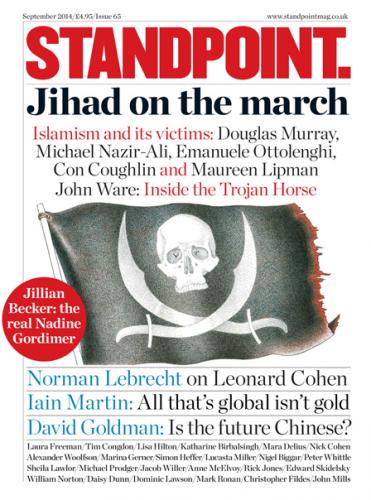
- The Plot to Islamise Birmingham’s Schools
- Nigeria, Iraq, Gaza—The Threat is the Same
- Radical Islam and its Invisible Victims
- The Man Who Tried to Teach us all a Lesson
- Globalisation and The Crisis of the Nation State
- The Medium Isn’t Always the Message
- What sort of Europe does Cameron Want?
- Is China outstripping the West at innovation?
- Piketty’s panacea will make inequality worse
- The Moral Strength of Leonard Cohen
- Designer who taught us to keep it simple
- The US Can Still Help Save Syria — and Iraq
- Russian Resurgence has Blindsided Nato
- On Europe, Nothing Less than Treaty Change will do
- Putin has his Useful Idiots on the Left and the Right
- Sarajevo: Where the Century of Terror Began
- Allen Lane’s Pelicans Take Wing Once More
- How Not to Remember the First World War
- Opera is Not Just Our Most Expensive Noise
- Jonathan Miller: One Man, Two Cultures

11:06 PM
2:06 PM