


Theresa May: Unlike Trump, she knows where we're going (OGL v.3)
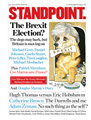
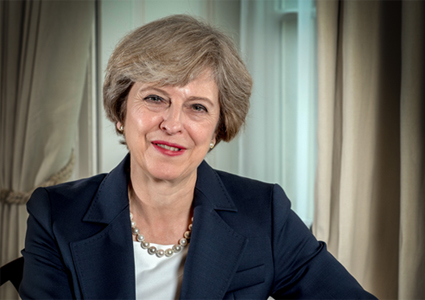
Theresa May’s decision to call a snap general election — just before Standpoint went to press — will surely come to be seen as a stroke of genius. Although it came out of the blue, even for the Westminster lobby, its justification was instantly apparent and her logic irresistible. Indeed, future historians may conclude that it was unavoidable, if only because there was no other way of ensuring that the Prime Minister could carry out what she clearly sees as her overriding purpose: to obey the majority who voted last year to leave the European Union. Britain — and especially England — expects that Mrs May will do her duty.
Compare Theresa May’s clear sense of direction with Donald Trump’s erratic policy shifts and abrupt personnel changes. The President has now been in office for 100 days: a good moment to take stock. To this end, we have assembled experts on both sides of the Atlantic to audit the Trump administration’s foreign and domestic policies. The avalanche of acrimony unleashed by and upon the Trump presidency has made it almost impossible to achieve any degree of objectivity on the subject.
There is still no sign of consensus on Mr Trump. His character and conduct continue to polarise not only Americans, but the whole West, and indeed the rest. However, the US strike on Syria and the subsequent diplomatic offensive against North Korea have served to rally international support at least temporarily. Even Moscow and Beijing seemed taken aback by the speed and decisiveness with which Assad was punished for what he and they must have assumed would be ignored in Washington as merely one more atrocity. The White House and the Pentagon also need to coordinate their plans before they go public. Of course, the more hawkish and interventionist Mr Trump becomes, the more he will galvanise opposition at home and abroad. But friends and foes alike now know that this President does not draw red lines and then allow them to be crossed. Instead, he strikes without warning; and his unpredictability could work to his advantage. He may not yet be a neoconservative, but he has certainly been mugged by reality.
Whereas the jury is still out on the Trump presidency, on Brexit we have at least a provisional verdict. Even before the election announcement, public opinion in Britain had moved decisively in favour of Brexit going ahead. There is little appetite for a second referendum or for a “soft Brexit”; the public overwhelmingly supports Theresa May’s negotiating stance. Like her, the public wants free trade with Europe, but control of immigration too. However settled, this view has failed to deter the bad losers: those who have neither the desire nor the capacity to recover from last year’s defeat, and who now exhibit a perverse schadenfreude at every opportunity that presents itself — such as the threats and slights that still emanate from continental capitals and Eurocrats about Brexit.
There is still no sign of consensus on Mr Trump. His character and conduct continue to polarise not only Americans, but the whole West, and indeed the rest. However, the US strike on Syria and the subsequent diplomatic offensive against North Korea have served to rally international support at least temporarily. Even Moscow and Beijing seemed taken aback by the speed and decisiveness with which Assad was punished for what he and they must have assumed would be ignored in Washington as merely one more atrocity. The White House and the Pentagon also need to coordinate their plans before they go public. Of course, the more hawkish and interventionist Mr Trump becomes, the more he will galvanise opposition at home and abroad. But friends and foes alike now know that this President does not draw red lines and then allow them to be crossed. Instead, he strikes without warning; and his unpredictability could work to his advantage. He may not yet be a neoconservative, but he has certainly been mugged by reality.
Whereas the jury is still out on the Trump presidency, on Brexit we have at least a provisional verdict. Even before the election announcement, public opinion in Britain had moved decisively in favour of Brexit going ahead. There is little appetite for a second referendum or for a “soft Brexit”; the public overwhelmingly supports Theresa May’s negotiating stance. Like her, the public wants free trade with Europe, but control of immigration too. However settled, this view has failed to deter the bad losers: those who have neither the desire nor the capacity to recover from last year’s defeat, and who now exhibit a perverse schadenfreude at every opportunity that presents itself — such as the threats and slights that still emanate from continental capitals and Eurocrats about Brexit.
Like this article? Share, save or print using the icons below:


- Time To Revisit The Two Cultures
- The Battle Against The Philistines Never Ceases
- Who Will Do Justice To Our Judiciary?
- How The EU Elite Paved The Way For Populism
- Trump's Appeal Is More Roosevelt Than Reagan
- Anything Dennett Can Do, Scruton Does Meta
- Why France Is Revolting Against The Ancien Regime
- A Letter To Our Great-Grandchildren
1:05 PM
7:05 AM
12:04 PM
8:04 PM