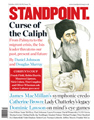




Moran: Churchill's personal physician
Ordinarily, Churchill should have resigned, as his wife wished, and the Queen sent for Eden. However, that day Eden was being operated on in Boston. It was held to be unfair to Eden if Butler was appointed PM. Butler could have asserted himself, but as on two later occasions when he might have claimed the post, he loyally held back. There was no way a peer, such as Lord Salisbury, could have been made a caretaker
premier, so a conspiracy was hatched.
The first problem was the bulletin. Moran had prepared, and he and Brain signed, a tactful but honest bulletin: "For a long time, the Prime Minister has had no respite from his arduous duties and a disturbance of the cerebral circulation has developed, resulting in attacks of giddiness. We have therefore advised him to abandon his journey to Bermuda and to take at least a month's rest."
Butler and Salisbury vetoed this because medical correspondents would correctly tell the public that their PM had suffered a stroke. When King George VI had his chest operation, a bulletin talked loosely about "structural changes in the lung", and while doctors assumed correctly that this meant cancer, this was not widely discussed in the press.
One of the few truthful royal bulletins, and certainly the most eloquent, was Lord Dawson of Penn's on George V, stating: "The King's life is moving peacefully towards its close."
This sentence, written on a Sandringham menu card, was much appreciated throughout the Commonwealth. In Edward VIII's sole Birthday Honours, Dawson was elevated to a Viscount. Dawson's words were also truthful because 150 minutes after he wrote them, he killed the King with an injection of heroin.
Butler and Salisbury therefore prepared their own bulletin, which the two physicians agreed to sign: "The Prime Minister has had no respite for a long time from his very arduous duties and is in need of a complete rest. We have therefore advised him to abandon his journey to Bermuda and to lighten his duties for at least a month."
Colville sent for the three press lords, Beaverbrook, Bracken and Camrose, who agreed to a total gag. Butler took the Cabinet and told them of Churchill's stroke, although this was not minuted, while the business of the state was conducted by Colville and Churchill's son-in-law, Christopher Soames.


- Liberty And Sovereignty
- Art And Public Culture In The 1830s And Today
- The Casanova Of LaSalle Street
- The Writer
- New Poetry
- Cartagena Poems
- A British Subject
- Travels with Betjeman
- Kizerman and Feigenbaum
- Communism’s Comeback?
- Irving Kristol on Jews and Judaism
- The State of Charity
- Teeth
- La Buena Muerte
- Judaeophobia
- Cool It
- Rachmones
- From 'Russia'
- 'Going Out' and Five Other Poems
- The Final Edition

10:05 PM
10:07 PM
4:01 AM
7:12 PM