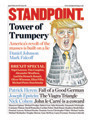



Wolfe has not published a memoir or autobiography. In general he leaves himself out of his writing. But the career of Tom Wolfe, as told by Tom Wolfe, is the story of an outsider swimming against the tide, first in non-fiction and then in novels. Things got interesting when a strike knocked out New York’s newspapers in 1963. “You weren’t going to catch me on a picket line,” Wolfe said in an interview several years ago. “So I went to Esquire with a story about custom cars.” That article, his first magazine piece, was originally titled “There Goes (Varoom! Varoom!) That Kandy-Kolored (Thphhhhh!) Tangerine-Flake Streamline Baby (Rahghhh!) Around the Bend! (Brummmmmmmmmmmmmmm) . . .” Tom Wolfe was already Tom Wolfe.
More magazine work followed. The subject matter was diverse — Las Vegas, a Nascar driver, New Yorker editor William Shawn, Californian surfers — but all are an attempt to understand the zeitgeist. Then, in 1968, he published his first book, The Electric Kool-Aid Acid Test, which follows novelist Ken Kesey and his band of Merry Pranksters, who travel across America taking LSD in a brightly-painted school bus. It quickly became the definitive text on the emergence of hippie culture. The invitations to lunch and reminders to be at the Rockefeller Centre for 8.15 a.m. to appear on the Today Show that populate the box of Wolfe’s correspondence from 1968 demonstrate the splash he had made. One of the more unusual compliments The Electric Kool-Aid Acid Test earned came from a correspondent in London who said in a letter to Wolfe that “the book is a magnificent, harrowing experience and it made me really understand why people read pornography — to experience it vicariously. But you do better than good porn, provoking not vicarious experience but actual experience.”
As Wolfe tells it, during this part of the late Sixties, he and a number of writers of his generation — including Joan Didion, Truman Capote, Gay Talese and Hunter S. Thompson — were experimenting with a new approach to their craft. What became known as the New Journalism was the art of writing non-fiction as though it were fiction, with dialogue and scenes resembling the novel rather than the newspaper report. The output of these writers, including Wolfe, was innovative and exciting, but the New Journalism (the title of a 1973 anthology of writing from this genre and published with an introduction from Wolfe) was let down by its misleading name. Really, Wolfe and his contemporaries were part of a renaissance of literary non-fiction, something great writers have been producing for centuries, rather than the creation of something entirely new. But the questionable novelty of the New Journalism need not obscure the exciting, important work these writers were producing.
After The Electric Kool-Aid Acid Test came the “Radical Chic” brouhaha and, in the Seventies, more of Wolfe’s signature magazine writing as well as a foray into cultural criticism with The Painted Word (1975), an attack on abstract and conceptual art and the critics who encourage it, and, later, From Bauhaus to Our House (1981), a critique of much modern architecture in which he asked of America, “Has there ever been another place on earth where so many people of wealth and power have paid for and put up with so much architecture they detested?” In 1979, he published The Right Stuff, his best-selling book to date, which described the early days of the US space programme and was made into a film in 1983. At the end of the Seventies, Wolfe was a writer at the peak of his powers. Every subject he touched with his non-fiction writing turned to gold. And so he decided to write a novel.
More magazine work followed. The subject matter was diverse — Las Vegas, a Nascar driver, New Yorker editor William Shawn, Californian surfers — but all are an attempt to understand the zeitgeist. Then, in 1968, he published his first book, The Electric Kool-Aid Acid Test, which follows novelist Ken Kesey and his band of Merry Pranksters, who travel across America taking LSD in a brightly-painted school bus. It quickly became the definitive text on the emergence of hippie culture. The invitations to lunch and reminders to be at the Rockefeller Centre for 8.15 a.m. to appear on the Today Show that populate the box of Wolfe’s correspondence from 1968 demonstrate the splash he had made. One of the more unusual compliments The Electric Kool-Aid Acid Test earned came from a correspondent in London who said in a letter to Wolfe that “the book is a magnificent, harrowing experience and it made me really understand why people read pornography — to experience it vicariously. But you do better than good porn, provoking not vicarious experience but actual experience.”
As Wolfe tells it, during this part of the late Sixties, he and a number of writers of his generation — including Joan Didion, Truman Capote, Gay Talese and Hunter S. Thompson — were experimenting with a new approach to their craft. What became known as the New Journalism was the art of writing non-fiction as though it were fiction, with dialogue and scenes resembling the novel rather than the newspaper report. The output of these writers, including Wolfe, was innovative and exciting, but the New Journalism (the title of a 1973 anthology of writing from this genre and published with an introduction from Wolfe) was let down by its misleading name. Really, Wolfe and his contemporaries were part of a renaissance of literary non-fiction, something great writers have been producing for centuries, rather than the creation of something entirely new. But the questionable novelty of the New Journalism need not obscure the exciting, important work these writers were producing.
After The Electric Kool-Aid Acid Test came the “Radical Chic” brouhaha and, in the Seventies, more of Wolfe’s signature magazine writing as well as a foray into cultural criticism with The Painted Word (1975), an attack on abstract and conceptual art and the critics who encourage it, and, later, From Bauhaus to Our House (1981), a critique of much modern architecture in which he asked of America, “Has there ever been another place on earth where so many people of wealth and power have paid for and put up with so much architecture they detested?” In 1979, he published The Right Stuff, his best-selling book to date, which described the early days of the US space programme and was made into a film in 1983. At the end of the Seventies, Wolfe was a writer at the peak of his powers. Every subject he touched with his non-fiction writing turned to gold. And so he decided to write a novel.
Like this article? Share, save or print using the icons below:


Post your comment
More Text
- The Viagra Triangle
- Two Languages And The Chasm Between Them
- Western Civilisation In Crisis
- The Man On Whom Everything Was Lost
- The Long Shadow Of Malthus
- Beyond Obama: Advice To The Next President
- Salerno Diary
- Liberty And Sovereignty
- Art And Public Culture In The 1830s And Today
- The Casanova Of LaSalle Street
- The Writer
- New Poetry
- Cartagena Poems
- A British Subject
- Travels with Betjeman
- Kizerman and Feigenbaum
- Communism’s Comeback?
- Irving Kristol on Jews and Judaism
- The State of Charity
- Teeth
Popular Standpoint topics

- Shame On The Liberals Who Rationalise Terror
- The Cowardice Of John Le Carré
- Beyond Obama: Advice To The Next President
- The Establishment Is In Denial — Yet Again
- Is There A Right Way To Write?
- Did Burke Betray The Cause Of Liberty?
- Double Games Of The UK Muslim Brotherhood
- Two Languages And The Chasm Between Them