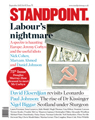



The unions' destruction of the Heath and Callaghan governments did them no good. They succeeded only in persuading mainstream opinion that they were over-mighty subjects, "holding the country to ransom" — to use another characteristically English cliché. Their defeat allowed the triumph of Thatcherism and the destruction of the old Left. To understand the present crisis, you must accept that the system established by Margaret Thatcher and modified by Tony Blair and Gordon Brown has collapsed and English rage against those who take advantage is now roaring against the political and business elites.
It is an inchoate and often directionless anger, which can appear left-wing or right-wing, depending on the angle you look at it from. A better way of understanding the modern mood is to dispense with conventional political labels and turn to the 17th- and 18th-century descriptions of the anger of the country against the corrupt court: the loathing of outsiders of the advantages those on the inside track enjoy. The modern equivalents of bewigged courtiers and favoured monopolists are the politicians, bankers, quangocrats and senior civil servants. They have access to power but, more importantly for understanding popular fury, to public money. Who pays taxes and who receives tax revenues are the basic questions of politics. At the moment, too much is going to those who need it least.
When the Titanic sank, it was said that the plebs in steerage watched as first-class passengers hogged the places in the lifeboats. Today's plebs could be forgiven for sharing their astonishment as they watch the executive class hog public money as the country goes down. Consider the events of the past two years. First, banking imploded and destroyed many illusions with it. If you had asked senior civil servants before the summer of 2007 to name Britain's unique selling point in an overcrowded, globalised world they would have immediately pointed you to the City. China and India were turning out millions of graduates who had all the skills of their counterparts in the West, but were willing to work for one-third of their wages. The mandarins did not know how manufacturing and information technology industries could compete, but in financial services they believed we had a world-beater. The City was the unstoppable cash machine, the source of tax revenues and national pride.
Labour leaders who wanted money to fund their social reforms were as ready as Alan Greenspan to forget a lesson at least as old as the South Sea Bubble: bankers must be kept on a leash because banks cannot be allowed to submit to the market's normal punishments for imbecilic management and be allowed to fail. Instead of ordering prudent protection, the political class encouraged fantastic recklessness. The Financial Services Authority's job was not "to discourage the launch of new financial products", Labour said as it laid down the terms of trade for London's banks and hedge funds in the 2001 Financial Services and Markets Act. The FSA had to avoid "erecting regulatory barriers", it continued, must "consider the international mobility of the financial business" and "avoid damaging the UK's competitiveness". No one would tell the police to avoid damaging the competitiveness of the tourist trade by not arresting drunken visitors, or to avoid damaging the competitiveness of the music business by not arresting cocaine-snorting pop stars. But in the case of the City, there was indeed one law for financiers and another for the rest of us.
Even when his country stood on the edge of the precipice, Brown was so lost in Panglossian fantasies that he could not see the danger. "Over the ten years that I have had the privilege of addressing you as Chancellor, I have been able, year by year, to record how the City of London has risen by your efforts, ingenuity and creativity to become a new world leader," he told the bankers at the Mansion House dinner of 20 June 2007. On 14 September 2007, Northern Rock went under.


- How Jeremy Corbyn's Coup Hijacked Labour
- Corbyn's Signpost Back To The Ghetto
- Unionists, Don't Despair: Scotland Is Not Lost — Yet
- Britain's Apologists For Child Abuse
- Lift The Fee Cap And Set Universities Free
- The Story Behind One Dead Man's Penny
- Hitler's 'Ecological Panic' Didn't Cause The Holocaust
- Meet The Montalvos: The First Global Family
- Mr Gove, Here Is Our Statute of Liberty
- A British Bill Of Rights
- Something For Nothing Just Won't Do Any More
- Ditch Ed Miliband's Crazy Energy Legacy
- The English Public School: An Apologia
- An Open Letter To Nicky Morgan
- Escape The Heat: Head To London's Crow's Nests
- Collusion Cut Both Ways In The Troubles
- Decline Of The East? The Chinese Say No
- Conservative, Moi? Jamais De La Vie!
- How To Rescue Iraq From Obama's Folly
- Europe Must Never Again Betray Its Jews

4:07 PM
2:07 PM
1:07 PM
1:06 PM
8:06 PM