



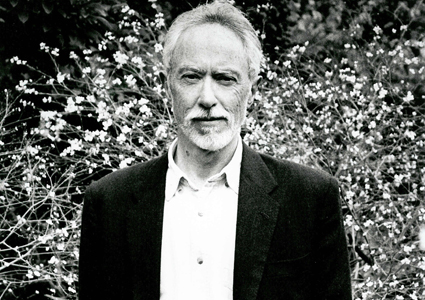
 J.M. Coetzee: His sentences are freeze-dried and packed tight
For a novelist of big skies and scorched landscapes, J.M. Coetzee is a curiously chilly writer. He was born in Cape Town, and South Africa was the setting for his early fiction. In 2006 he became an Australian citizen, and though his adopted country is far from his birthplace, the hostile Australian landscape is a near match for the terrain of his work. Coetzee's novels take place in hot, harsh places and yet he's a cold-blooded writer. His sentences are freeze-dried and packed tight. His people are lonely and isolated; their lovemaking is frigid, or violent; and the human body is often portrayed as ugly, like a chunk of frozen meat on a hook.
There is little compassion in Coetzee's work. As a novelist he's a lurker, a creepy watcher in the corner. He is unsentimental, and when he writes about the muck of life-about rape, or racism, for example-he does so without dirtying his sentences. There's a big chip of ice in Coetzee's heart. Where another writer might bring compassion into the narrative, Coetzee often leaves it out. The rape scene in his 1999 Booker Prize-winning novel Disgrace is a study in icy detachment. The trauma is built with a patient accumulation of details. When the academic David Lurie is set ablaze, Coetzee writes: "His eyes burn, he tries to wipe them. He recognises the smell: methylated spirits [. . .] The scrape of a match, and at once he is bathed in cool blue flame." There are no hysterics, just the facts.
Coetzee likes to map the unexplored edges of the literary canon. His novel Foe (1986) was an imaginative flight around the plot of Robinson Crusoe. In this new novel, The Childhood of Jesus, he plays with one of the best-known stories in literature: the life of Christ. But the book's relationship to the Gospels is an oblique one. He hasn't recast in his own prose what we already know from the Bible, as Norman Mailer did in The Gospel According to the Son (1997). Coetzee plays a much weirder game. He invents his own simple story, and sprinkles it with subtle hints to the life of Christ. The result is a complex allegory.
The novel is set in the fictitious city of Novilla. A five-year-old boy, David, arrives in this strange city. There is a man with him, Simón. Like Joseph in the Gospels, Simón has an unusual relationship with the child in his care. Simón says that David is "not my grandson, not my son, but I am responsible for him". The pair came by way of Belstar, a "camp", where they spent six weeks learning basic Spanish, the language of Novilla. They've arrived like all newcomers to Novilla, with "no memories, with a blank slate".


- Shame On The Liberals Who Rationalise Terror
- The Cowardice Of John Le Carré
- Beyond Obama: Advice To The Next President
- The Establishment Is In Denial — Yet Again
- Is There A Right Way To Write?
- Did Burke Betray The Cause Of Liberty?
- Double Games Of The UK Muslim Brotherhood
- Two Languages And The Chasm Between Them
10:03 PM