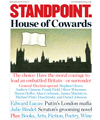



Thinking about the Habsburgs, it is probably fair to say that they would have viewed the very idea of agreeing to a referendum as insane. We have somehow sleepwalked into a situation where our political classes have created something ruinous. The SNP are like the dwarves in The Hobbit who can only open the stone door into the mountain when the keyhole appears at a specific time on a specific day. To their amazement they found themselves in power through the implosion of Labour's credibility, facing off against a comically rebarbative (and atypical) "southern English toff" government in London, and in the run-up to the 700th anniversary of the Battle of Bannockburn. This entirely fluky alignment has made a bid for independence plausible, for a few moments: and so something which will be irreversible and hugely damaging to almost everyone involved has been somehow allowed to go ahead. Incidentally, should there not perhaps be some minor element in Nato's mission which involves dispatching squads to arrest anyone who organises political rallies around old battle commemorations? Or indeed arrests anyone who even tries to use some daft medieval scrimmage like Bannockburn to trump later centuries of cooperation and mutual respect? Anything involving slow drumbeats, flaming torches, body-paint, the usual junk, is so patently disturbing that it is hard to believe it is allowed to happen at all. It may be a grand day out for all the family, but there are plenty of places to put children's bouncy-castles other than on a blood-soaked field. In what sense is this any different from commemorating Tannenberg or Kosovo Polje? The atavistic anti-Englishness is no less horrible and mad than the anti-Russian or anti-Muslim connotations of these other two examples. How can this be in any sense "socialist", the key marker the SNP uses to differentiate itself and Scotland from a notionally less collectivist and welfarist England? But it in fact squares the circle in a very traditional way — it is "national socialist".
Whatever the result of a referendum, it will change how the UK feels about itself in deeply destabilising ways. There is a chance that it could be positive – that a long overdue general devolution of powers from London across the whole UK might happen. But the stakes are probably already too high for something so genial. Salmond has mortgaged his future on the idea that somehow an act of collective will by a group of people living at this moment within a specific geographical area and in a specific age group, will take a decision which will conjure into existence something better – a state which future generations, those outside these borders and those too young to vote now will be grateful for. To reach this mystical goal he has fuelled what amounts to ethnic hatred, the sundering of previously natural relationships, a dislike of Scotland that was simply non-existent before and an angry bitterness for a large minority whatever the result. As he points the finger at an ever more bulging number of "enemy" targets — the "Westminster government" (a hideously creepy piece of "othering", transmuting Scotland's democratic forum for over 300 years into a sort of hostile camp), the EU, economists, business leaders-it is impossible not to hear in his recent speeches the violent and perhaps irreversible ripping apart of the innumerable bonds that have so far held the UK together.
Like this article? Share, save or print using the icons below:


More Features
- Mr Cameron, Show The Country That You Care
- Campaign Diary
- Defying Duopoly: The Rise Of The Insurgents
- Don't Rig The System In Favour Of Coalitions
- Warring Gangsters Who Run The Country
- Political Correctness Is Devouring Itself
- An Archival Treasure Trove—And All Online
- Do we value freedom of speech in Britain?
- Can Europe's Jews Feel Safe Alongside Muslims?
- We Cannot Avoid The Battle Over Blasphemy
- Inside The World Of 'Non-Violent' Islamism
Popular Standpoint topics

- The Loss Of Faith Made Music Mute
- The Great Betrayal: How Liberals Appease Islam
- Political Correctness Is Devouring Itself
- The New Language Of Political Narcissism
- Don’t Listen to Britain’s Designer Demagogues
- Why The World Still Loves Shakespeare
- An English parliament: the only way to save the UK
- Putin and the Art of Political Fantasy
- The Loss Of Faith Made Music Mute
- The Great Betrayal: How Liberals Appease Islam
- Political Correctness Is Devouring Itself
- The New Language Of Political Narcissism
- Don’t Listen to Britain’s Designer Demagogues
- Why The World Still Loves Shakespeare
- An English parliament: the only way to save the UK
- Putin and the Art of Political Fantasy
- The Loss Of Faith Made Music Mute
- The Great Betrayal: How Liberals Appease Islam
- Why The World Still Loves Shakespeare
- Political Correctness Is Devouring Itself
- Who Will Lead The Berlin Band?
- Putin and the Art of Political Fantasy
- The New Language Of Political Narcissism
- Inside The World Of 'Non-Violent' Islamism
4:09 PM
12:09 PM
8:08 AM
1:06 AM
8:06 PM
6:05 AM
8:04 PM
10:04 PM
12:04 PM
9:04 PM